It’s the end of January, and my first doctor’s appointment of the year will be coming up soon. To me, that means two things: 1) I get to “earn” my medical, dental and prescription deductibles . . . yet again; and 2) this year’s round of new privacy forms — the ones we affectionately call HIPAA agreements — will be thrust at me for signature . . . yet again.
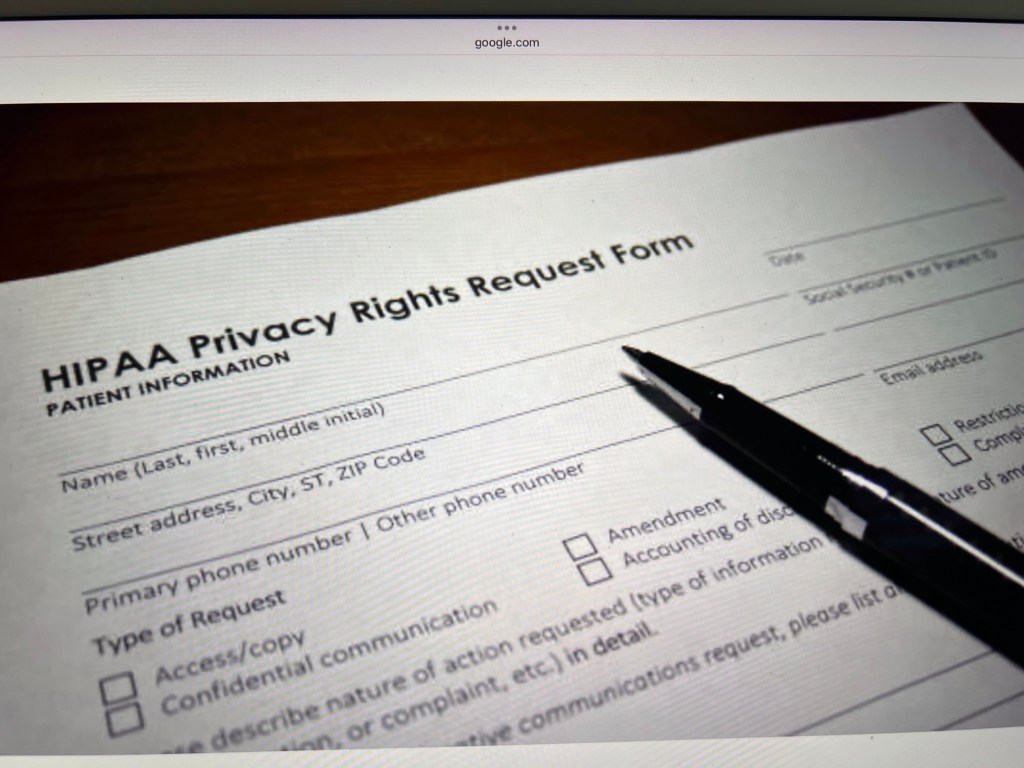
We Americans have become all too familiar with these forms since the U.S. Congress enacted the federal Health Insurance Portability and Accountability Act (HIPAA . . . get it?) of 1996. But do we really understand what it means? Has anybody actually read it? What protections does it offer us? Is it mandatory? And why do we have to renew it every single year, year after year after year? Our driver’s licenses, passports, even our credit cards are all issued for several years at a time. Our marriage vows are forever (hopefully). But HIPAA? Oh, no! Every single year, in every single doctor’s office . . .
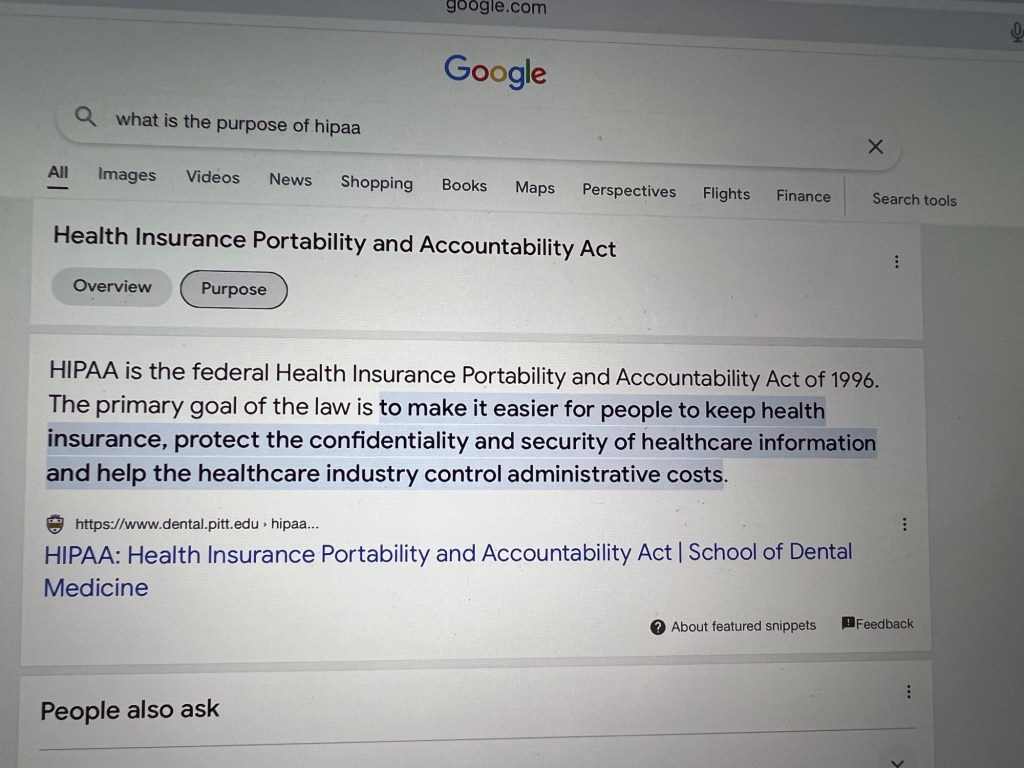
I can’t answer the “why” question. But as to its purpose, it is supposed to “make it easier for people to keep health insurance, protect the confidentiality and security of healthcare information and help the healthcare industry control administrative costs.”
Really?
The confidentiality part, okay. I get that, and I appreciate it . . . although in today’s cyberworld, any sort of confidentiality has become something of an amorphous concept. But if good intentions count, then this is nice.
But how does it make it easier for people to keep their health insurance? I know people who have been struggling with that issue for years, because they’ve changed jobs or become unemployed, or their spouse has passed away, and they simply can’t afford individual coverage. Or because they’ve retired, found that Medicare is practically worthless, and Medicare supplemental coverage is outrageously expensive. (Trust me; I know.)
And as for the healthcare industry controlling administrative costs . . .

But is it mandatory? Short answer: No, not really. As to what happens to your life if you don’t sign it . . . well, that’s another good question. Sorry I don’t have the answer to that one either. But supposedly a healthcare provider cannot refuse to treat you just because you don’t sign it.
*. *. *
Well, all of these questions drove me to do a little research on HIPAA, and this is what I found. The Act is codified as 45 C.F.R. [Code of Federal Regulations], Parts 160, 162 and 164. (Part 163 is marked “Reserved” — presumably until someone thinks of something else they’d like to spend taxpayer money on to get it passed through Congress.) Part 160 alone has five subparts (A-E), with 552 sections thereunder. A .pdf copy of the unofficial, “simplified” version takes up 829 kb. of valuable space; in solid form, it’s about 105 pages of gobbledegook.
Now, my years of legal training have served me well from time to time, and I always try to do my due diligence. Therefore, for purposes of comparison — and having not much else to do today — I also looked up the following:
— The Magna Carta, written in the year 1217 A.D., originally contained just 63 clauses . . . four of which are still valid today;
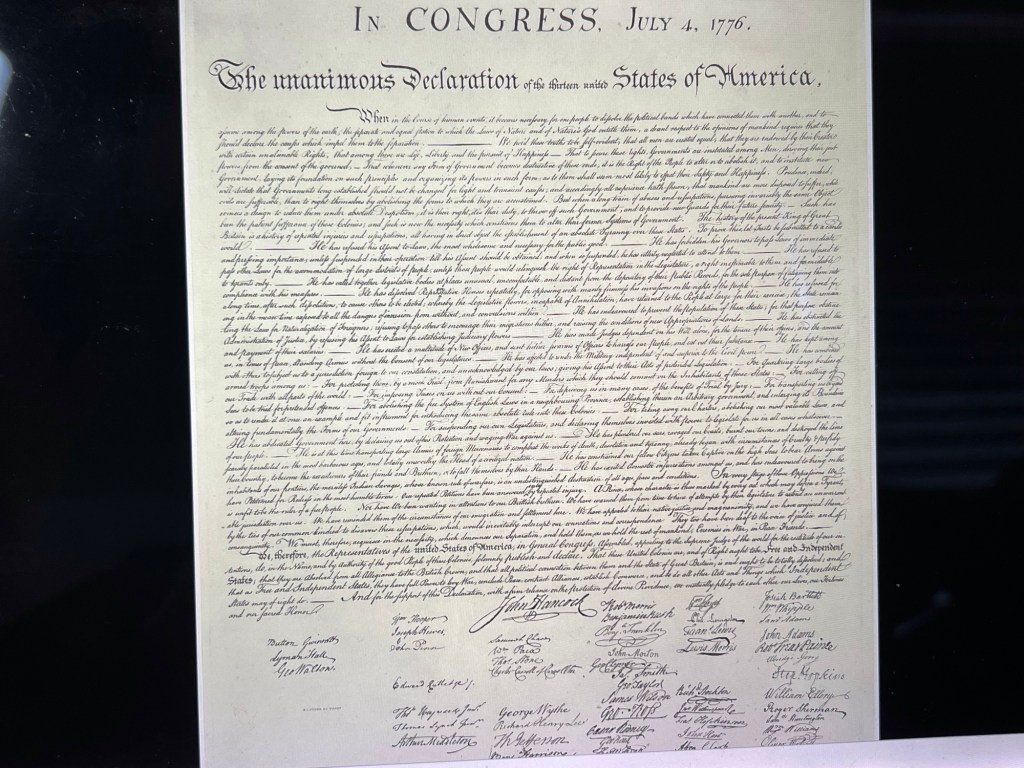
— The U.S. Declaration of Independence was written on a single page, including the signatures;
— Abraham Lincoln managed to keep the Gettysburg Address to just three paragraphs;
— That bedrock of American democracy known as the United States Constitution occupies a mere four handwritten pages, also including signatures. It contains just seven Articles. Since its ratification in 1788, only 27 amendments have been added. Twenty-seven changes in a period of 236 years: just over one every decade. These cover another 20 or so pages, with nearly half of that space taken up by footnotes as to the dates of the individual states’ ratifications. So, we’re talking about 24 pages, more or less, original and amendments combined.
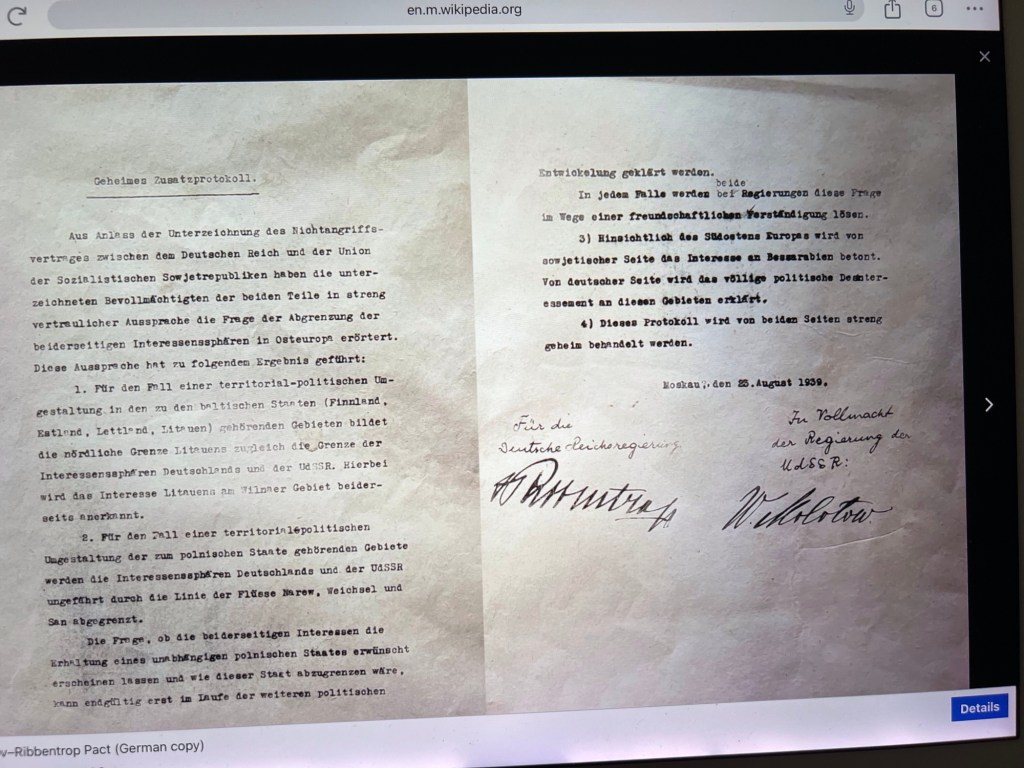
— And finally, there’s the noteworthy Molotov-Ribbentrop Pact, signed on August 23, 1939, by emissaries of Josef Stalin and Adolf Hitler (Vyacheslav Molotov and Joachim von Ribbentrop, respectively), guaranteeing a ten-year period of non-agression between the Soviet Union and Germany . . . Oh, wait a minute. Maybe not the best example, because it was terminated less than two years later, on June 22, 1941, when Hitler apparently had a memory lapse and invaded the Soviet Union. But my point is, it was only two pages of historic crappola.
I wonder how many kilobytes all of those documents together would require. Not that many; certainly not 829.
*. *. *
Now, personally, I don’t give a rat’s patootie who knows what doctors I visit, or what ailments have ravaged my body in recent years (or in the distant past, for that matter). I suppose if I were running for elected office, I might not want my opponents to know if I’d, say, had an abortion in my younger days (which I did not). Or I can understand not wanting my significant other to find out about that embarrassing social disease I may have picked up during my pot-smoking, hippie-commune-living years (that’s not me, either). But other than that, my attitude is: What’s the big deal? So the scars from all my orthopedic surgeries make me look like the sister of Frankenstein’s monster. So what? You want to see them? No problem.

But that’s just me. And I understand that many people — possibly the great majority — would not agree with me. So all in all, any privacy protection seems like a good thing. Although, considering the stuff that some of those same privacy-obsessed people put out there on social media for the entire world to snicker about and comment on . . . well, I’m sensing a little inconsistency here. But that doesn’t bother me either. It’s not my business.
Just sayin’ . . .
Brendochka
1/30/24
 The Blog About Everything … and Sometimes Nothing