February 25, 1994: Homeward bound once more, and happily not on Aeroflot this time. But because my original booking had been through Rome, returning the same way turned out to be the least expensive route, even though there was no connecting flight and it meant an overnight stay in Rome. I had reserved a room at a small hotel near the airport and arrived around 11:00 p.m., well after the hotel’s dining room had shut down for the night. But one of the benefits of a boutique hotel is the personal attention they are able to pay to their guests, and this one was no exception. The concierge found a person still in the kitchen who was able to prepare some of the food that hadn’t been served at dinner, and delivered my light meal to me personally. It was delicious, and with a glass of Chianti to wash it down, I was able to sleep like a baby.

I awoke early the next morning — Saturday the 26th — in order to catch the hotel’s shuttle bus to the airport. As I was dressing, I again tuned in to CNN, this time to learn that there had been yet another shooting incident in Hebron, a Palestinian city in the West Bank of Israel. Would they never stop?!! I wondered. It was an ongoing tragedy; but as an American who lived geographically far removed from the problems of the Middle East, and this being years before acts of foreign terrorism reached our shores, I never thought of the effect it might have here in Italy. That is, until I got to the airport . . .
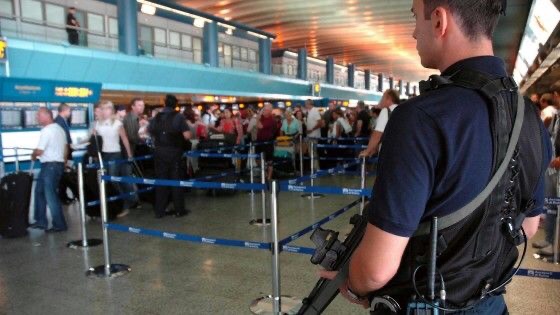
The lines in the terminal appeared endless. They snaked around the inside of the building to every airline counter, including mine. The police and military presences were heavy and heavily armed, many accompanied by their canine partners. This was Europe, where they had suffered their fair share of terrorist attacks; and I had forgotten that when things heated up in the Middle East, the response here was immediate . . . and impressive. So I found my line and waited as the security officer worked her way toward me.
When she finally reached me, she began by asking the usual questions: “What was the purpose of your visit to Rome, and how long were you here?”
Answer: “Overnight, just transiting.”
Logical next question: “Transiting from where to where?”
Oh-oh. My answer — “Moscow to Washington” — was clearly going to set off some alarms. And did it ever! Her next questions concerned the purpose of my visit to Moscow, where I had stayed and for how long, whether my luggage had ever been out of my sight, whether anyone else might have had access to it . . . And when I answered truthfully that I had stayed in an apartment and that yes, others had been alone with my bags for a while, she very apologetically said she would have to perform a search of my luggage. I responded that it was no problem, as long as I didn’t miss my flight, which she assured me would not happen.
And I said a silent prayer of thanks that I had had the good sense not to take Shvets’ $3,000, and even more so his son’s passport, from his mother. This was exactly the sort of thing I had been afraid of, although I certainly could not have known there would be an overnight Middle East problem. But there are many possible reasons for a baggage search — even a simple random check — and it was almost as though Mama Shvets had been hoping for that when she loudly insisted that I could hide the passport under my clothing. The things I thought about her and her precious son in those moments do not bear repeating, but I’m sure they’re not difficult to imagine.

In any event, the search was quick and respectful. Security officers are trained to read people’s reactions and body language, and I suppose she could sense that I wasn’t hiding anything. When she finished, she even took me up to the head of the line to be checked in, as a sort of apology for the inconvenience. The plane was boarded on time, and off we went.
I had a seat mate this time: an American woman, 40-ish, well-dressed, professional-appearing — someone I thought I might enjoy chatting with. But she was as silent as the American man on last summer’s Aeroflot flight. My usual get-acquainted questions — was this your first visit to Italy? business or vacation? what line of work are you in? — met with non-responsive, monosyllabic answers. She clearly did not feel like talking. I didn’t want to be intrusive, so I resigned myself to a long, quiet flight ahead and settled in with the book I had brought, thinking she might be more willing to talk a bit later. She wasn’t. We landed at Dulles on time, and she walked away without a word. So much for the friendly skies.
The next day, all hell broke loose.

First, there was Yuri Shvets to deal with. He was anxious to receive whatever his mother had sent back for him. The FedEx envelope with the passport was already en route (and actually arrived a couple of days later); but when he saw that I had brought only a letter and no money, and that most of his gifts for her had not made it into my luggage in the first place, he was livid . . . which was nothing compared to what I was feeling. I told him in minute detail of his mother’s performance and how irresponsibly, and even recklessly, she had behaved. His excuse was, again, that she was just a “simple Russian woman,” to which I replied, “Bull shit! She’s the mother of a KGB Major. Don’t tell me she doesn’t know how to behave in public.” I also let him know what had happened at the Rome airport. The conversation deteriorated from there, and I stopped just short of accusing him of trying to set me up — only because I had no proof. And because I was alone in my apartment with a very angry man. He finally took the bag and the letter and left, slamming the door behind him. I never saw or spoke to him again.
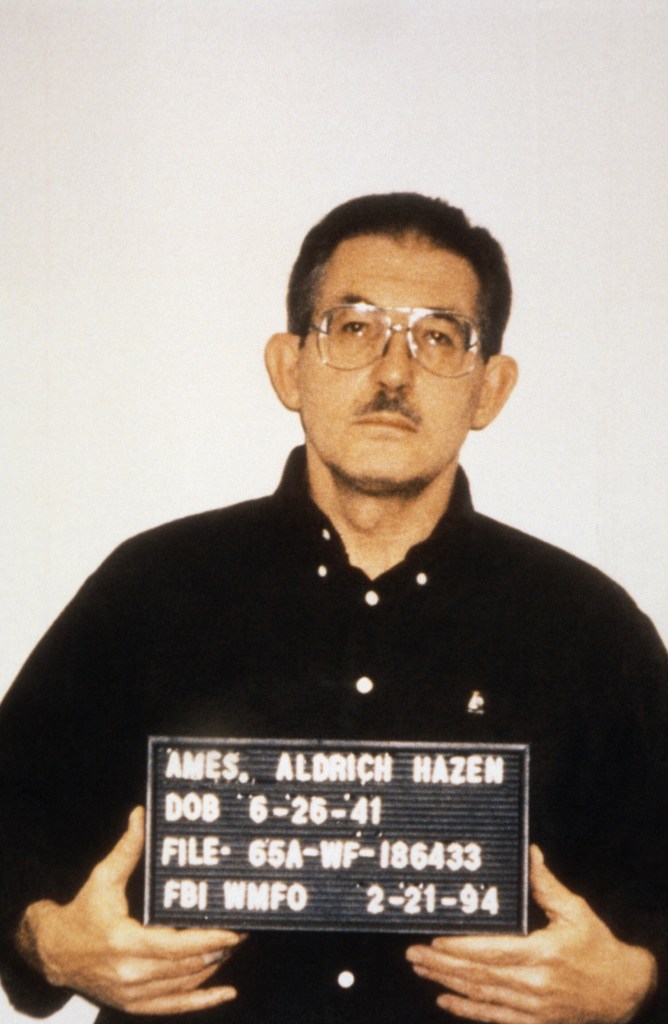
I called Eric on Monday to let him know I was safely back, and we made plans to get together in a day or so. In the meantime, I had caught up on the national and local news, which turned out to be full of the story of the CIA agent who had been caught spying for the KGB: Aldrich Ames, the man I had first heard of on CNN in Moscow. Folks there had shrugged it off as just another remnant of the Cold War; but here at home it was a big deal. Still, it had nothing to do with me.
Well, at least not directly, it didn’t. But as I read the details of his arrest, and the FBI’s actions in the days leading up to it, I realized that the coincidence in timing between that activity and my pending travel to Moscow was more than a little interesting. It was reported that Ames had been part of a CIA team scheduled for an official visit to Moscow, due to leave Washington on February 22nd — the very middle of the time I was also to be in Moscow — and that his arrest had been set for the 21st in order to forestall his leaving the country. But again I wondered: so what? I hadn’t even known the man existed.
And I had my own problems. Shvets’ book was soon to be released, and John Brockman was talking about pre-release publicity. My name was tied to both Shvets and Aksilenko, and I knew it was time to do damage control with Natalya at the Russian Embassy. This was not going to be pleasant . . .
Brendochka
5/25/23 (re-posted 12/17/23)
 The Blog About Everything … and Sometimes Nothing