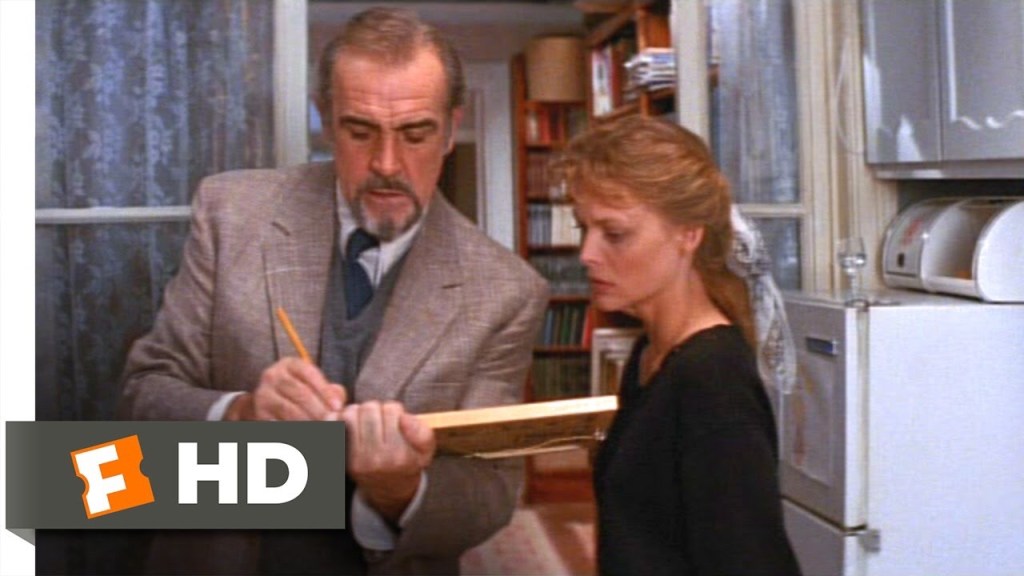
“‘Glasnost’ is on everyone’s lips, but the rules haven’t changed for either side.” — The Russia House, John le Carre (1989).
*. *. *
The remainder of 1992, following my return from Moscow, passed in a blur of activity: refining and promoting my business plan; consulting with my new associates in Moscow; meeting with people at the Russian Embassy and the local college; and — having quit my full-time job to devote myself to my real passion — even doing a little temp work to bring in some extra income. And then, toward the end of the year, another bolt out of the blue struck with perfect timing.
I received a heads-up phone call one day from Ben Fishburne, a former partner at Surrey & Morse / Jones Day who had worked closely with Walter Surrey for years on transactions in China, the Soviet Union, and elsewhere. He had recently bumped into an old client and friend of Walter’s, Gil Robinson, who told Ben that he was heading up a humanitarian aid foundation in Russia. While he already had a top-notch staff in Washington, Gil was searching for someone to accompany their D.C. manager, Kate Williams, to Moscow for a week — preferably someone who spoke the language and knew something about the country. Eureka! Ben asked if Gil remembered me — which he did — and gave him my number, saying that he thought I might be interested. Talk about understatement.
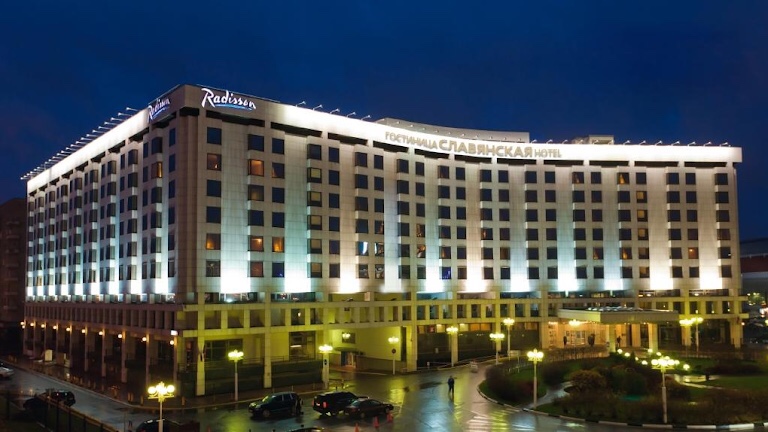
When Gil called, I tried not to get too excited, remembering the APCO disappointment. But this time was the real thing, if only for a week. There were meetings scheduled, but I would still have adequate time to pursue my own interests. We were booked into my old stomping grounds, the Slavyanskaya Radisson Hotel; it was February, 1993.
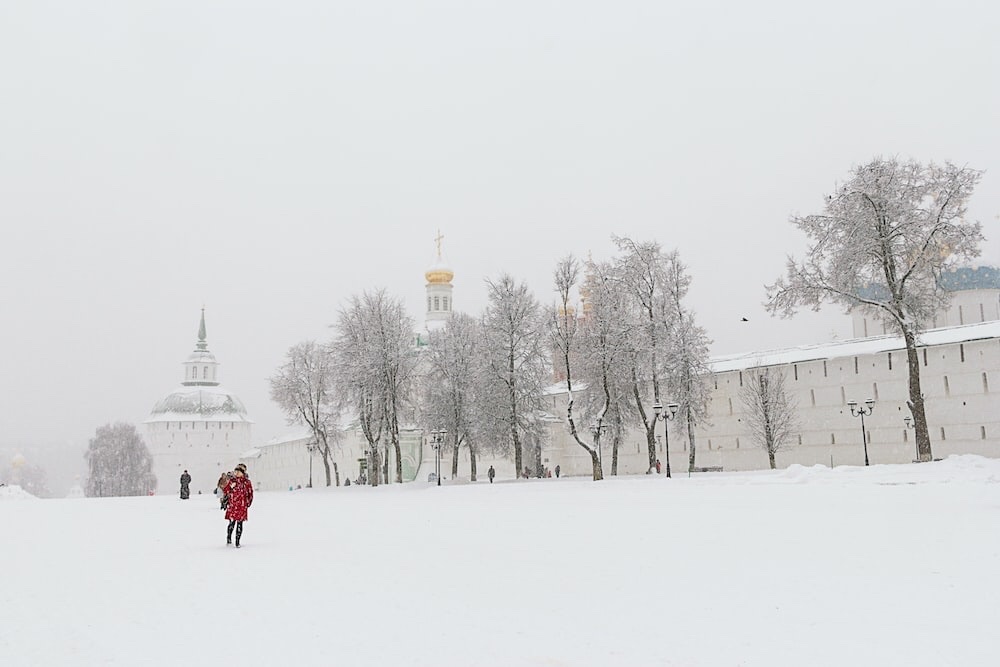
February in Moscow, again. I know I said I loved the whole Doctor Zhivago thing, but two years in a row? Still, you don’t pass up a golden opportunity just because of a little snow.
Corporations To End World Hunger Foundation seemed a lofty name for a small group with a noble purpose but limited reach. But they were doing good work. With funding from the U.S. Department of Agriculture, and food product from ADM Corporation, they were supplying healthy, high-protein food — the first Veggieburger — to children in orphanages and hospitals in Moscow, St. Petersburg, Kiev (Ukraine), and Minsk (Belarus). I was thrilled to be associated with them, helping children in need and — optimistically — building bridges between our two countries.
Gil Robinson had at one time been an Ambassador-at-Large in the U.S. State Department, and had an impressive biography overall, giving him access to people and places that might not be available to everyone. He had somehow managed — without anyone on his team who spoke a word of Russian — to start the registration process in Moscow; locate and rent a large apartment in a building owned by the Ministry of Defense and occupied by high-ranking military officers; develop contacts in all four cities; and hire a driver and jack-of-all-trades named Vitold, who was a maniac on wheels but knew where and how to acquire virtually anything.
One afternoon when Kate and I both had some free time, Vitold took us on a little sightseeing tour, ending at the famous Novodevichy Monastery. Most of the buildings were not open to the public, but we were able to wander the snow-packed lanes through the cemetery where the creme-de-la-creme of Russian and Soviet society were spending eternity: famed writers such as Chekhov, Gogol and Bulgakov; the composer Prokofiev; and the unforgettable former Soviet leader Nikita Khrushchev, among numerous other cultural, political and military elites. After an hour or so, when we were just about frozen to the bone, we suddenly heard . . . the distant voices of angels.
Seriously?
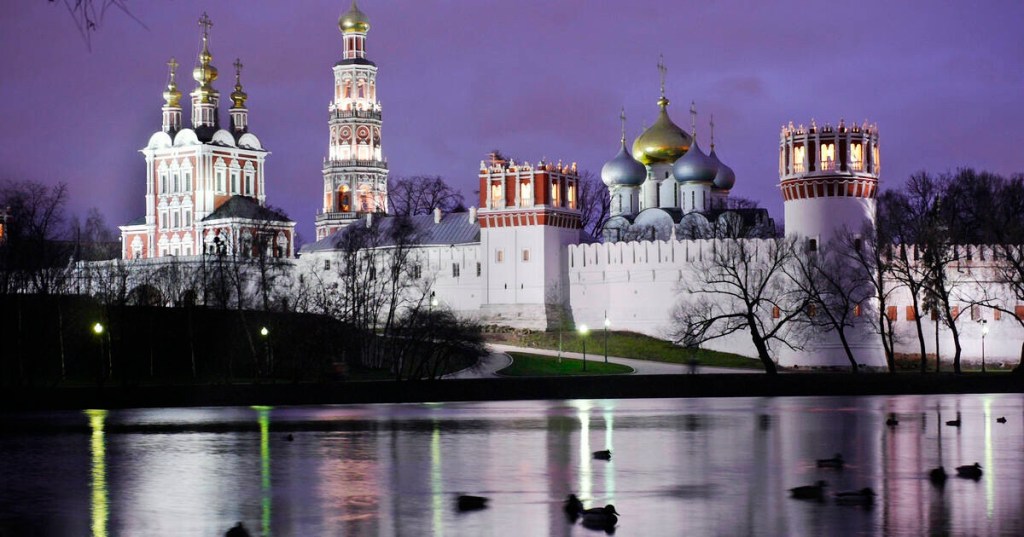
No . . . and we were not hallucinating. What we were hearing was the liturgical music of a choir practicing in one of the Monastery’s churches . . . and the doors were open. We headed for the warm indoors, excited at the opportunity to thaw out and to see what the inside of a Russian Orthodox church looked like. The first surprise was the emptiness — no pews, no benches, no seats of any kind; just a large expanse of concrete flooring. Along the left and right sides were tall windows, below which were statues of various saints, and tables with long, thin candles to be lit for the saint of one’s choice. And at the front was a large altar, behind which loomed an incredibly beautiful, nearly ceiling-high iconostasis separating the main part of the church from the sanctuary. The angelic voices were drifting out from behind that screen.
There were a few worshipers — mostly old women, who, despite the obvious pain involved, would periodically kneel and touch their heads to the hard floor. And strategically posted on either side of the room were two men in suits and overcoats, one on each side, just standing and watching. Kate wondered who they might be — perhaps security? Vitold didn’t respond, but I did: I was sure they were KGB. She thought at first that I was joking, but when she saw that I wasn’t, and Vitold nodded in agreement, she looked understandably nervous. So I whispered, “It’s okay; just ignore them” — which was pure bravado, of course. But the last thing we needed was for them to think we had anything to be nervous about. It may no longer have been called the Soviet Union, but some things hadn’t changed, despite glasnost.
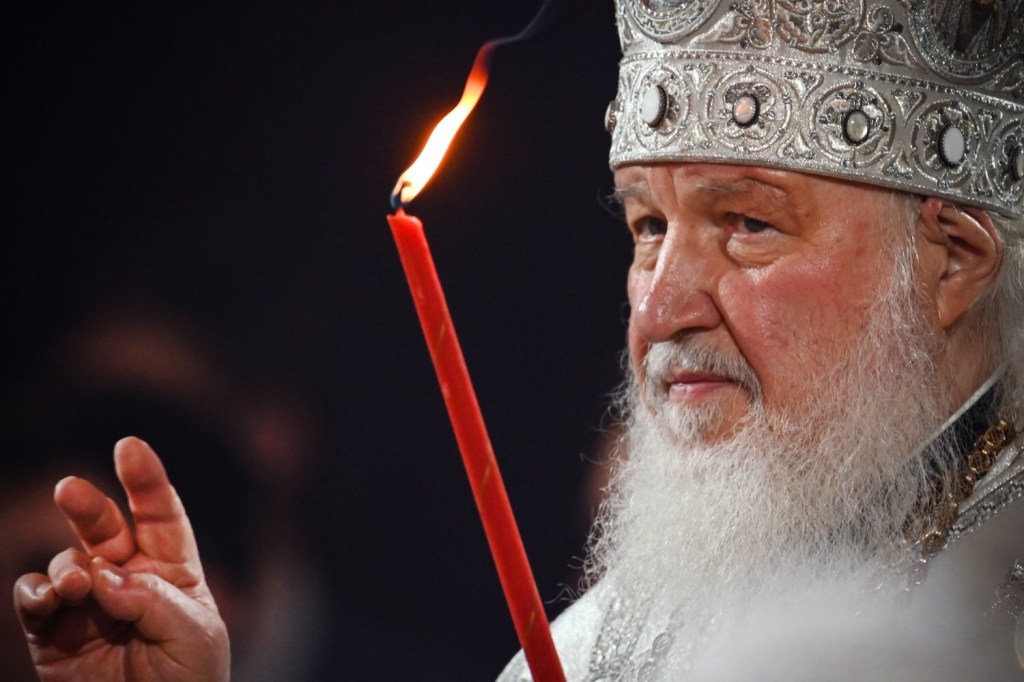
To our delight, we had arrived at the church at the perfect time. Without any fanfare, a priest — in long, white-and-gold robes and headdress, snowy white beard flowing from his chin halfway down his chest — emerged from the sanctuary and began a service for the small gathering. Of course, Kate and I couldn’t understand a syllable of the old Church Slavonic language, but with the choir of angels in the background, it sounded divine. The three of us were standing in front near the altar, soaking in the atmosphere, when suddenly the priest’s eyes caught mine . . . and held. And held. And held. His eyes were mesmerizing, and I could not bring myself to look away. I felt as though he was looking deep into my soul, and I wondered whether I was being blessed or cursed, or whether perhaps he was trying silently to warn me about the KGB’s presence; but it was unlike anything I had ever experienced. If I close my eyes today, I can still see that priest’s eyes and feel the power of his gaze.
Finally, after what felt like an eternity, he looked away and the service ended shortly thereafter. It was time for us to leave — and to walk past those KGB watchers still hanging out in the warmth of the church. I wondered if either of them had noticed my visual exchange with the priest, and I half expected them to stop us, if only to find out who we were and where we were from; but they didn’t. We did stop briefly to light candles to a couple of saints whose identities were a complete mystery to us, left a few rubles in the plate, and hurried out of the church and the Monastery grounds to Vitold’s heap of a car waiting nearby on the street — miraculously, with all of its parts intact. Spare auto parts were notoriously difficult to come by, and had a habit of walking away if left unguarded.
*. *. *
There was also time during that week to fulfill another of my long-time dreams: a night at the Bolshoi. Kate and I were able to get tickets, at premium prices, to a performance of the Aleksandr Borodin opera Prince Igor. While I was a little disappointed that there was no ballet performance scheduled that week — I much prefer ballet to opera — it was still the Bolshoi Theatre, and that was joy enough for me. Vitold drove us there, and on the way was stopped by the traffic police, the GAI, for some unknown violation. He was going to try to argue his way out of it when I told him to take the damned ticket and I would pay the fine — just get us to the theatre in time. The way that man drove, I’d have bet he was on a first-name basis with every traffic cop in Moscow.
But of course, we were late. We had orchestra seats, but since the opera had already started, we were not allowed to disturb the performance, and instead were directed naverkh — “upstairs.” At each level, puffing and panting, we were sent up another flight, and another, and another, until we wound up in nosebleed territory — the cheap seats, where most of the patrons were locals who couldn’t afford more and considered themselves lucky to be there at all. And as we sat down, trying to get our breath after scaling Mount Bolshoi, I noticed that most of the people there were families with children, all of them obviously enthralled by the performance on the stage far below them. I had to wonder how many American children would even allow themselves to be dragged to an opera, much less enjoy it. In some respects, culturally at least, Russian society seemed far ahead of ours.
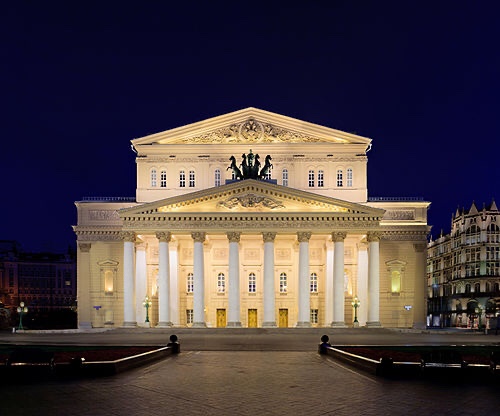
During intermission, we sipped champagne and mingled with the crowd, enjoying a bit of people-watching. We were then able to go to our assigned seats in the orchestra section for the remainder of the opera, but quite frankly, I missed watching the faces of the little kids upstairs under the eaves.
*. *. *
You know how sometimes you can go to a party expecting it to be a total drag, and end up having a wonderful time? Or on a blind date you’re really dreading, where it turns out you meet the love of your life? Well, my next event wasn’t a party or a date, but a simple get-together with an old acquaintance for a bit of pleasant conversation. I certainly never anticipated that that afternoon meeting would be one of the most significant turning points of my life.
“Viktor Akimov” — the commercial/economic First Secretary from the Soviet Embassy in Washington in the late 1970s and early ‘80s — was in fact Valentin Pavlovich Aksilenko. Everything else I’ve told you about him was factual, but I had originally thought to protect the privacy of some individuals by not naming them in my earlier narratives. However, since the stories I’m about to relate are already matters of public record, what would be the point? So, here we go . . .

On one of my free afternoons during that week of February 14, 1993, I again met with Valentin Aksilenko in the business center of the Slavyanskaya Radisson Hotel in Moscow. As we had done the previous February, we caught up on world events of the past year, and what each of us had been doing. This time, though, Valentin dropped a seemingly offhand comment to the effect that he was so glad to be “out of intelligence work.”
EXCUSE ME??? I could not have heard that correctly! Were those really the words of a man who obviously had never admitted being in the intelligence field, now telling me how happy he was to be out of it? And why was he revealing it at this particular moment? And why to me?
It’s thought that if you want another person to keep talking, you should just keep quiet. So I did. But instead of continuing, he became still. Leaning forward in his chair, with his forearms resting on his legs, hands clasped between his knees, he stared at the carpeted floor for a seemingly endless moment, deep in thought. I waited, scarcely breathing. At last he sighed as though having made a crucial decision, sat up straight, and looked back at me. To paraphrase his next words:
“I have a friend here in Moscow who was also an intelligence officer at the Embassy in Washington. He’s secretly writing a book about his experiences as a KGB spy in the United States, but obviously he can’t get it published here. We were wondering if you know anyone in the publishing business, and if you think you could help us?”
And there it was: that exact moment in the movie of John le Carre’s The Russia House, when the Russian Katya Orlova delivers a manuscript from her scientist friend to be placed in the hands of the British publisher, Barley Blair, for publication in England because its content is too explosive to be released in Russia.
Only this wasn’t a movie; this was real. And it was happening to me, right then, and right there, in Moscow. Oh! My! God!
It never ceases to amaze me how quickly the human brain can process information and make decisions in sink-or-swim situations. I reasoned that I had a choice between a flat-out “Sorry, no, I don’t” and a totally false “Actually, yes, I do.” But my brain, now in overdrive, told me there was a third option: stall. So what I finally said was that, in all honesty, I did not personally know anyone, but that I did know people in New York who might well have connections in publishing. And thereby I unknowingly altered the course of my future, as well as Valentin’s and his friend’s.
. . . that is, if there even was such a friend. He hadn’t mentioned the friend’s name. Wasn’t it just possible that Valentin himself might be this anonymous author, and the unidentified “friend” was merely a kind of misdirection? But there was no time for reasoning just then. I told him I would see what I could do, and left the thinking for later. We parted with a handshake and a promise to be in touch.
When Kate asked me at dinner how my meeting with my friend had gone, I said it had been really nice to see him again, and let it go at that. This was not the sort of information you share with the world. But I hardly slept that night, or for the next couple of nights. We left Moscow on Saturday morning, February 20th, arriving at Dulles International Airport in mid-afternoon Washington time — nighttime in Moscow. I was so exhausted by then — both mentally and physically — that I was in bed by 9:00 p.m. and actually did sleep, not waking until noon on Sunday, February 21st.
Yawning and stretching, I opened my apartment door, bent down to pick up the Sunday edition of the Washington Post, dropped it face-up on the kitchen counter, and headed toward the refrigerator for my customary wake-up glass of orange juice. And halfway there, I stopped dead in my tracks.
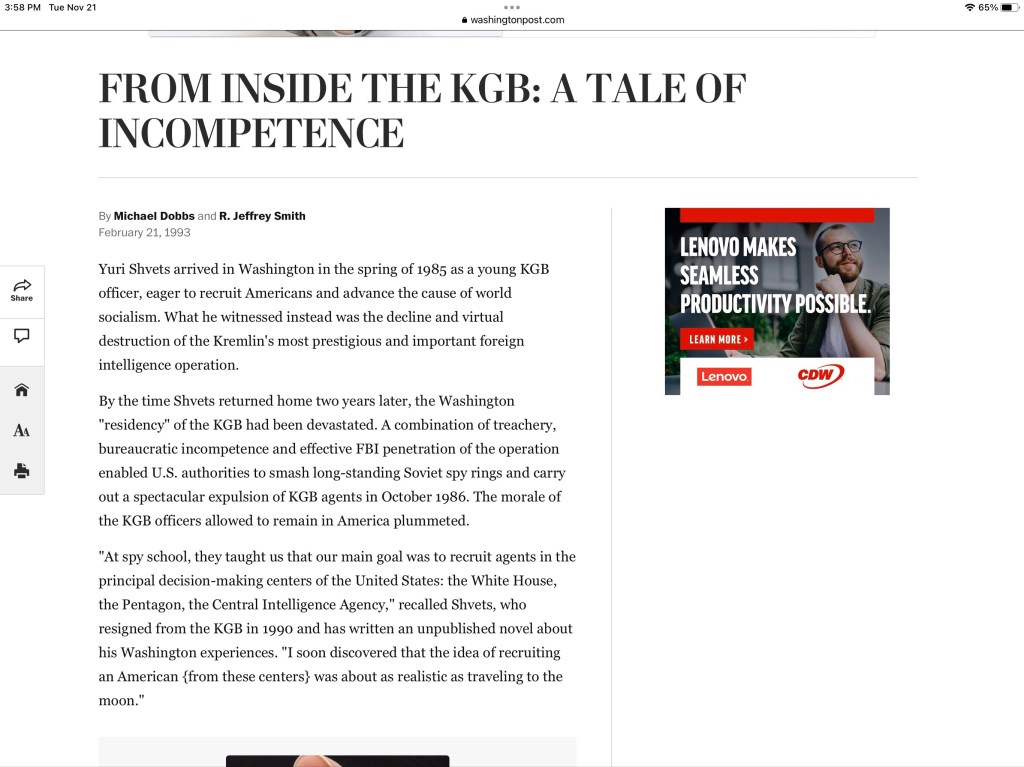
Something had caught my eye as that newspaper landed on the countertop. What was it . . . something about the KGB? Turning back, I focused on an article by Michael Dobbs, then the Post’s Moscow Bureau Chief, about a series of interviews given in Moscow — the last one just a few days earlier — by a former KGB Major named Yuri Shvets, who had served in the Soviet Embassy in Washington from 1985-87, and was now writing a tell-all book about his experiences there.
The words that came flying from my mouth as I stood alone in my kitchen that day are not fit for printing in this blog. Or anywhere else.
“That #&$*#$ has to be Valentin’s friend.”
“What the #$&%*$ is he doing??”
“Is he #$&#*$-ing INSANE????????”
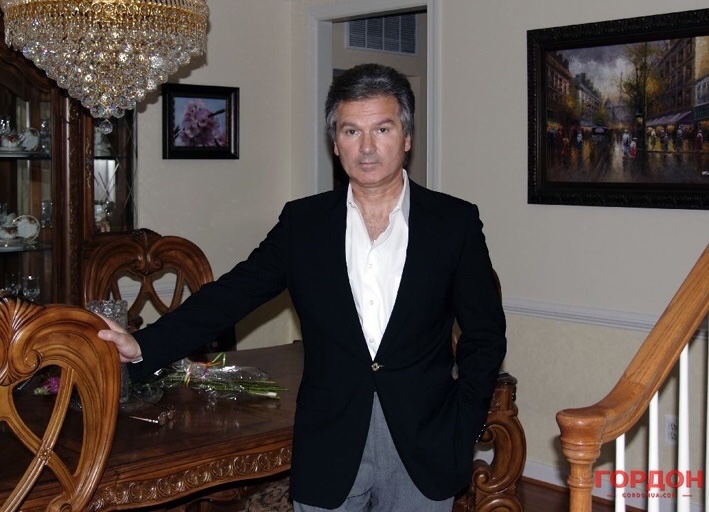
Well, whoever he was — Valentin’s friend or, unlikely, some other lunatic — I was sure he had just signed his own death warrant. I reread the article and tried to calm down. Then I reached for the phone and dialed Valentin’s number in Moscow, where it was nearly 9:00 p.m. There had to be a logical explanation for this.
*. *. *
Please don’t yell at me for stopping here. It’s an ongoing story, with many twists and turns and some fun stuff in between, that will require about a dozen installments to write. So, like a 1940s radio soap opera (but all true), I must ask you to tune in next time for the continuing saga, etc., etc.
Thanks, and TTFN,
Brendochka
3/16/23 (re-posted 11/26/23)
 The Blog About Everything … and Sometimes Nothing