I learned a lot of things in Prague. I learned that Adolph Hitler had considered it too beautiful to destroy, so only two German bombs hit the city during WWII: one landing on the City Hall, and the other on my friend Beata’s grandparents’ home (luckily, no one was in the house at the time). I learned that Russian and Czech are two distinctly different languages, and that Doberman Pinschers can be friendly. I learned that Mozart really rocks, and that cobblestones are murder on your feet. And I learned that I loved living abroad.
But most significantly, I learned that in 1991 there was a huge need in the recently de-Soviet-ized countries of Eastern and Central Europe for some sort of training programs for the thousands of individuals who would be lining up to work for all of the new Western companies springing up everywhere.
And I had an epiphany. If the need was so great in those countries, how much more desperate must it be in Russia, which had never known democracy or free enterprise. There were programs in the United States and elsewhere being created to train the new generation of Russian entrepreneurs, but what about the people who would be working for them? And who better to develop such a program than someone with years of exactly that type of work experience? Someone like me, for instance.
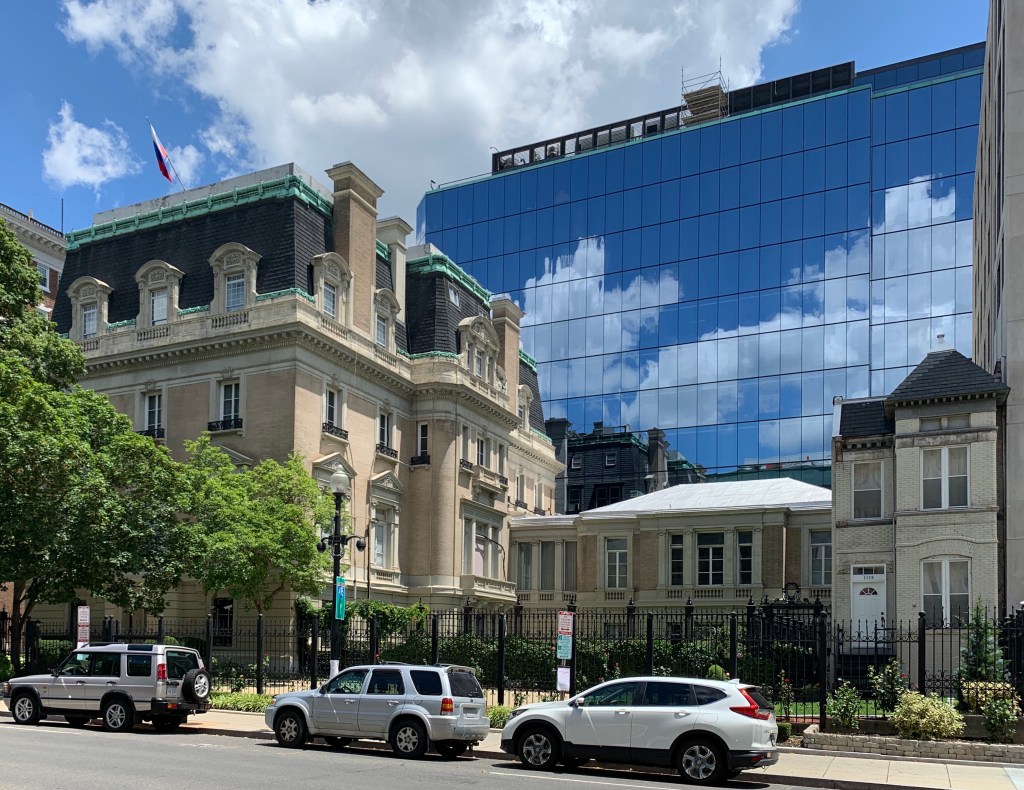
Again, the timing was serendipitous. My son and daughter were grown and on their own, and my mother had passed away shortly after my return from Prague, leaving me with an unexpected case of empty-nest syndrome. I had no one dependent on me any longer, and being back in a routine job just wasn’t cutting it. It was time for this little bird to fly. So I started spending my evenings and weekends writing — not fiction, not a travelogue, but a business plan. And when it was finished, I took it directly to the Russian Embassy. Now, if that’s not chutzpah, I don’t know what is.
And it paid off. My new contact at the Embassy, Natalya, loved it. A very bright and well-connected lady, she immediately set about referring me to people in Moscow who could partner with me in establishing my business school on their side of the Atlantic. As luck would have it, Natalya also was acquainted with — and introduced me to — the person at Northern Virginia Community College (NOVA) best suited to create the curriculum that would be needed there. My plan was to bring teachers to the U.S. for training in Western business methods and office procedures at one of NOVA’s campuses. They would then return to Moscow to pass on their knowledge to the students at a business school to be established there. Those students then would be qualified to become office assistants, bookkeepers, shop managers, and the like. It was direct, uncomplicated, and workable.
Everyone loved it. But, like any project, it had to be financed. Ugh! So I began promoting my business plan, including a proposed budget, to several American foundations, venture capital companies, and even a couple of government agencies. And while I waited for my financial “angel” to show up, I began planning my first solo trip to Moscow for meetings with Natalya’s contacts in February of 1992.
“February??? You’re going to Russia in February??????”
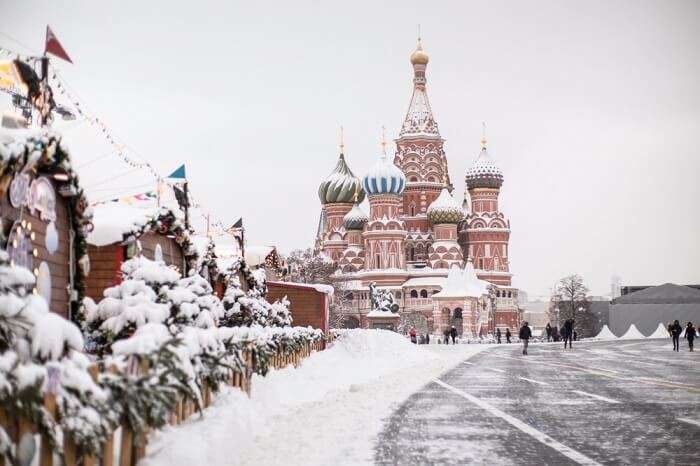
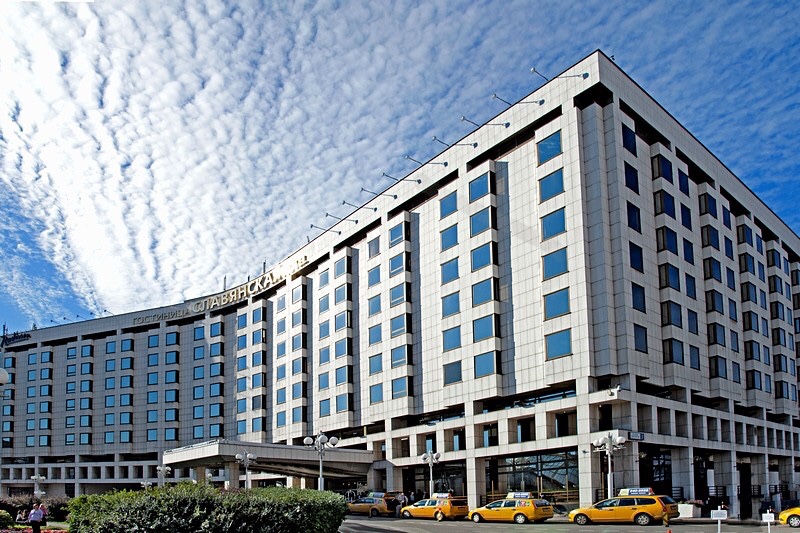
That was what I heard from everyone. And my reply was always, “Sure — why not?” Actually, I’d always wanted to see the Russian winter of Doctor Zhivago, and here was my chance. I took a week’s vacation from the law firm, packed some winter clothes, grabbed my warmest down coat and fur-lined boots, and made a reservation at the Slavyanskaya Radisson Hotel in central Moscow. And off I went.
On the long overnight flight, somewhere between dinner and a three-hour nap, I studied my notes and finalized my schedule. This time, when the plane landed at Sheremetyevo Airport, there was no Intourist guide or bus waiting for me as there had been on my first trip as a tourist three and a half years earlier. I had to fetch my own bags and find a taxi to take me into the city. And I had no American law firm backing me up, as I had in Prague. For the first time, it hit me that I was entirely on my own, in what was arguably one of the scariest cities on earth. What in hell had I been thinking?!!
Once I got to the hotel, though, my confidence began to return. It was a Radisson, after all, with all of the usual comforts and amenities, and staff who spoke English. In 1992, Moscow was crawling with Americans and other foreigners looking for business opportunities that just a couple of years earlier hadn’t existed there. The bar was full of them, the dining room was full of them, and the business center on the mezzanine was buzzing with them, in a cacophony of half a dozen different languages.
Now, about those Russian winters. They were right, all those people who said it was insanity to go there in February. But I found it perversely invigorating. It snowed a bit every night, and nearly every day. The snow was swept from the sidewalks by little old ladies with brooms; on the streets, it was simply driven over and packed down by the heavy traffic — no need for snow plows. The temperature barely inched above zero during the day, and dipped to around 20-below at night.
To compensate, Russians tend to overheat their buildings — including the Western hotels like the Radisson. But I can’t sleep in an oven, so I was pleased to find that the window in my room could be opened, and I lifted it just an inch or so before turning in that first night. The next morning, I went down to the coffee shop for breakfast and came back to my room to fetch my things for my first meeting, where I found a hotel maid — a very pretty young woman — fussing over the snow on the windowsill. She kept apologizing for what she assumed was an oversight by a hotel employee, and I had to calm her down before she could comprehend that I had opened the window myself. We chatted, and I gave her the little gifts I had brought for her — just some small American cosmetic and toiletry items, but unavailable in Russia in those days. Every day after that, I would leave her a little something, and — as I had hoped — nothing was ever missing from my room. And on my last day in the hotel, she actually brought a gift for me: a lovely picture book of Moscow. All because of a little snow.
*. *. *
The meetings Natalya had arranged for me were going well, and I was running non-stop from one to another. At the same time, I was learning about a Moscow I hadn’t known before: the small-town Moscow, where everybody knew everybody, and where — out of nine million people — you were still likely to bump into someone you knew.
One morning, as I sat at a table in the hotel coffee shop, grabbing another quick breakfast before my first meeting of the day, I looked up and spotted a familiar face — and an American one, at that. I called out his name and he turned, completely surprised to see me in such unexpected surroundings. Randy Bregman was an attorney from Washington whom I had known for years, and with whom I shared a number of mutual friends and acquaintances. He sat down, ordered a cup of coffee, and we talked for a while.
He was associated at the time with the large, well-known law firm of Arnold & Porter. He told me that they had created a public relations firm called APCO that had established a business presence in Russia, and they were looking for the right person who could move to Moscow and manage their office. Knowing my background, he asked if I might be interested, and I answered almost before he finished the question. Of course I was interested! Are you kidding? This was my dream come true: another overseas opportunity, and one that would put me onsite where my new business school would be operating. I could multi-task.
“Just one thing, though,” Randy cautioned. They had a Russian partner, a man he called simply Vlad, who could be — in his words — rather bossy and difficult to get along with. Shrugging it off, I reminded him of my ten years with Walter Surrey, the attorney I had been working with when Randy and I first met, and assured him that if I could handle Walter, I could handle anyone. He laughed, and agreed. He gave me the name of the partner (Sarah something, as I recall) in Arnold & Porter’s Washington office who was in charge of finding a manager for the Moscow APCO office. He said he would let her know to expect a call from me when I got back to the States the following week. I couldn’t believe my luck — and as it turned out, there was good cause for my disbelief. More on that coming up later.
*. *. *
Among the people with whom I met that week was a group of educators from a district known as Lyubertsy on the outskirts of Moscow. (It also happened to be the location of one of the most notorious, violent “Mafia” gangs in the entire Moscow area, but that was beside the point.) They invited me to visit their district and to join them, their Mayor, and some of their teachers for lunch one day, transportation to be provided. It was a fairly long drive, and afforded me the extra perk of seeing some of the rural area outside of the city that I might not otherwise have seen.

Their building was located on a former government-run collective farm, which had now been privatized. The food they served was all locally produced, including the pig who had given its life so that we might have shashlik (shishkebab) for lunch — prepared right there, on the farm, outdoors, in a clearing surrounded by three feet of piled-up snow. And that was where the table had also been set with a typically Russian over-abundance of food: Outdoors. In ten-degree weather. At a picnic table. In the snow. Get my drift? This was “frigid,” redefined.
There was a little warmth radiating from the barbecue grill if you stood right in front of it, but the only real heat source was from the bottles of vodka they had stashed in the snow beneath the table. Hospitable, hardy folks, these Russians. Of course, every bite of food had to be preceded by a toast: to U.S.-Russian friendship, to President Yeltsin, to success in business, to world peace, to President Bush, to you, to me, to someone’s evil mother-in-law . . . to all of us. And we’re talking about bottoms-up shots of ice-cold vodka, not dainty sips of wine. I was doing fine, relying on my Russian/Ukrainian heritage to sustain me, until it was time to go indoors for our meeting. (Please don’t ask why we had to eat outdoors when there was a perfectly lovely building just 20 or 30 yards away; apparently, it’s a thing over there. Or perhaps they were just testing my mettle. In any event, it would have been rude to question it.)
Did you know that it’s possible to consume a whole lot of alcohol in icy-cold surroundings without feeling any effect? Or that it will hit you like a brick wall as soon as you come indoors to the warmth? Well, I didn’t know — but I found out quickly enough. The funny thing was, as off-kilter as I suddenly found myself, I was also speaking the most fluent Russian of my life, and understanding everything the others said, without relying on the interpreter. At least, I think that’s what happened. Later, when I sobered up, I just had to pray that I hadn’t nullified any existing treaties between our governments. Without my sloppily-scribbled notes, I would have had no clue as to what transpired at that meeting, but I did recall that we parted as great friends. I suppose there is a moral to this story somewhere, but I’m damned if I know what it is.
*. *. *
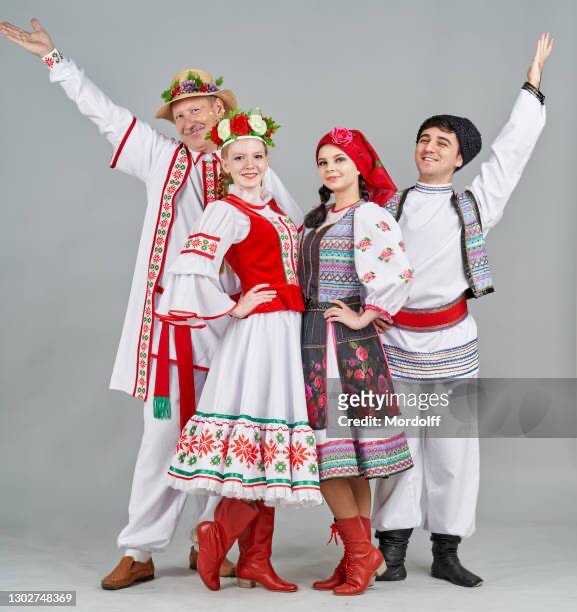
I also found time that week to have dinner at the home of a couple I knew: a Russian lawyer and his wife who had been in Washington the year before, and who were also friends of Randy Bregman. See what I mean about everybody knowing everybody? And there was a whirlwind tour of the city with a delightful group of young Russian folk dancers who had been given my name as someone who might be able to arrange a U.S. tour for them (which, unfortunately, I couldn’t — not my bailiwick).
During that walkabout with the dancers, though, I learned a bit more about the nature of the typical Russian babushka (grandmother). I was wearing my nice warm, puffy down coat, scarf, gloves, and boots, but typically my head was uncovered — I hate wearing hats and hoods. I get hat hair, okay?77 So, as we were standing in a scenic spot while I took a few pictures, this elderly woman came rushing up to me, scolding me in Russian: “Cover your head, you’re going to catch pneumonia,” she kept repeating as she actually reached out and tried to pull the scarf that was around my neck up higher onto my head. As I tried to wave her hands away without actually slapping them, I told her that I was fine, that I was from the north and accustomed to the cold, etc. — until she finally gave up, uttered one last “tsk,” and walked away, muttering under her breath. Not shy, those wonderful little old Russian ladies. I used to have a beloved grandmother like that.
*. *. *
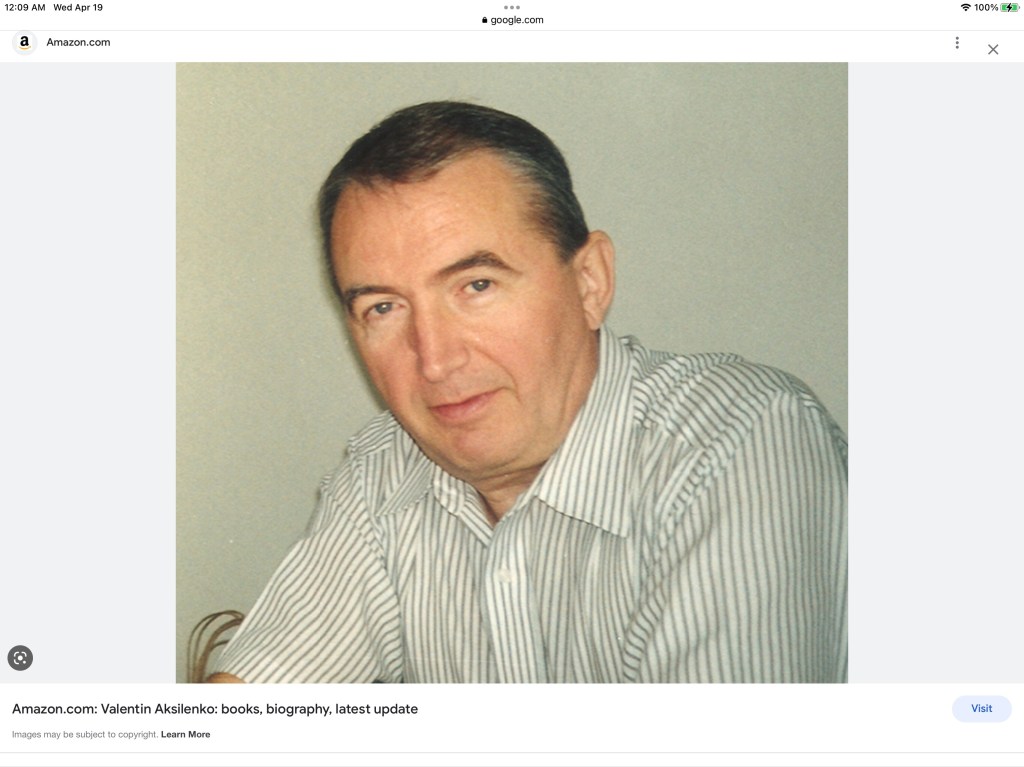
What turned out to be the most significant meeting of that week, however, seemed at the time to be the least meaningful. If you’ve been following my journey from the beginning, you may remember “my first Commie,” Viktor Akimov, and my having missed seeing him on my first trip to Moscow as a tourist in 1988. Before leaving for this visit in 1992, I sent him a fax (the world had advanced from telexes), and this time I received a reply happily agreeing to get together. And so we did, in the business center of the Radisson, where we drank tea and had a fine time catching up on the ten years since he had left Washington. I told him about my business school proposal; but he said very little about what he was currently doing. He seemed tired, and somewhat at a loss in the new open environment in Russia. We agreed to keep in touch, and that was that. I could never have imagined what lay just a year in the future . . . and a year after that.
It had been a hectic week, and I left Moscow worn out but optimistic. Except for the money thing. The Russians didn’t have any, and I was going to have to raise it all at home. And of course I still had to follow up on the APCO opportunity. So when I got home, I called Sarah and scheduled a meeting.
*. *. *
Hydrogen peroxide and vinegar . . . chlorine bleach and ammonia . . . alcohol and barbiturates . . . Brenda and Sarah. What do they have in common? They’re all toxic combinations.
Now, we’ve all met people to whom we’ve formed either an instant attraction or an instant dislike. But this woman had such an incredibly off-putting attitude, and an air of all-knowing superiority, that she was in a class of her own. She began by describing her plans for the Moscow office and her requirements for the person to fill the opening. She needed someone who could serve two roles: office manager, and IT specialist. Two completely different, incompatible jobs, requiring two different and incompatible skill sets and personality types. Two roles that, in every other organization, are filled by at least two people; but she was convinced that one should be able to do the job. Then she capped it off by naming a salary that was not just laughable — it was downright insulting. Even for Washington, it would have been ridiculously low; for Moscow, a notorious hardship posting, it was ludicrous. She clearly knew nothing about the realities of Russia.
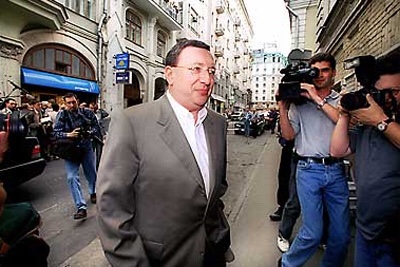
I left that meeting feeling very let down. It wasn’t the end of the world, of course, but it was the end of what I had considered potentially a great opportunity. I was sorely disappointed — until about eight years later, when I was reading a newly-published book about Boris Berezovsky, one of the first, and wealthiest, of the new Russian oligarchs. In the book was a mention of another oligarch, Vladimir Gusinsky, who had been involved in many successful business enterprises, including — are you ready? — APCO. Omigod! This clearly was Vlad: Randy Bregman’s “bossy-and-difficult-to-get-along-with” Vlad. And the same Vlad who had since fallen out of favor with the government, been arrested on charges of corruption, and who — even today, in 2023 — is living in exile somewhere in the world, still on Vladimir Putin’s hit list. Go ahead and check him out on Google; it’s a fascinating story, and one in which I might easily have become an innocent bystander — or even deemed guilty by association. I had dodged that bullet, perhaps literally. I guess I owe Sarah my thanks after all, for what was arguably the worst job interview ever. So . . . belatedly and somewhat grudgingly . . . I do thank you, Sarah.
*. * . *
Have I mentioned that I’m writing a book? No? Well, I am. In fact, it’s the impetus for my having started this blog in the first place. But I’ve gone on long enough today, so please come back next time for the beginning of that story, the reveal of the true identity of “Viktor Akimov,” and a segue into the most memorable two years of my life. In the words of the immortal Al Jolson, “You ain’t heard nothin’ yet.”
So long for now,
Brendochka
3/9/23 (re-posted 11/25/23)
 The Blog About Everything … and Sometimes Nothing