I’d been thinking about doing it for 25 years — even started a couple of drafts in a variety of formats, crumpled them up, and tossed them into the “circular file.” The truth is, I was afraid I might inadvertently reveal information that could still be considered sensitive, or even classified, which I had promised not to do. And I didn’t want to open another can of worms by inquiring. So I hesitated. But time passed — lots of it . . . and far too quickly, I might add. Finally, three years ago, I decided it was time: I sat down at my laptop and began writing for real. It felt good, and right . . . a sort of catharsis. And now I have a 300-page manuscript, and a proposal — in draft form, at least.

So, what next? I sent the proposal, as sort of a test drive, to a literary agent I knew from years ago through a mutual acquaintance. Got an email acknowledgment, and then . . . nothing. So I bought a book on how to submit a proposal, including a listing of what has to be every publisher and literary agent, living or dead, on this and every other planet. And I’m telling you: there are thousands of them. And each and every one of them has their own requirements for submission.
Obviously, I had never heard of most of these folks, so I began with the best-known — which also means the biggest — of them. The advantage of that is knowing that they’re reputable, and also are able to pay the biggest advances to their authors. The downside, of course, is that they’re literary snobs; they can afford to be. Most publishers won’t even consider a writer who isn’t represented by a literary agent, unless you’re already famous (or infamous) for some other reason. And if they will deign to look at a manuscript or, more likely, a book proposal (and more about those little devils later), they caution you that it can take weeks, or even months, before you can expect a response.

So you start checking out the lesser-known publishers. Some will tell you they only represent authors who specialize in certain genres, which is very helpful to the elimination process. Then they tell you whether they want the proposal or the whole manuscript, or sometimes both. And I don’t know about you, but I hesitate to send my life’s work — my intellectual property — to an unknown individual who may or may not like it enough to agree to publish it, without first having that individual sign an ironclad non-disclosure agreement . . . which is just one more aggravation and not likely to succeed in any event. So, eliminate that pile of names.
Of course I had also bought and studied a book by a successful author on how to write my book proposal. Omigod! Do you remember those end-of-the-school-year term papers? They were nothing compared to a book proposal. It’s not just a two-page summary; it’s a book in itself, with sections titled Background, The Story, Purpose, The Theme, Approach & Style, About Me, Format & Delivery Date, A Market For This Book (I always thought that was the publisher’s job!), then the Chapter Summaries . . . a brief outline of each and every chapter, with an actual chapter attached, a description of any photographs or drawings to be included, etc., etc., etc. The worst section was “About Me.” It was kind of like a job interview: how much is too much? When does self-confidence become bragging? Or, conversely, when does modesty become a sign of incompetence? I’m never quite sure.

Oh, and don’t forget the cover letter — oddly called a “query letter” — which has a requisite format of its own. Putting the whole package together was actually more agonizing than the three years of research and writing of the book itself. You know those old movies where the young aspiring writer puts his typewritten manuscript into a brown envelope with a short cover note saying “Dear Mr. Publisher, I hope you like my book, I put my whole heart and soul into writing it,” and drops it into a nearby mailbox. The publisher reads it, loves it, buys it, it becomes an immediate best-seller, and the young writer finds fame and fortune, marries his childhood sweetheart, and they and their two-and-a-half kids all live happily ever after in their little vine-covered cottage with the white picket fence. Yeah . . . like that’s ever going to happen.
Well, no, it’s not — because there’s also the matter of the prescribed method of submitting your work. A hand-addressed brown envelope will never even be opened. Some publishers want a paper copy, but most want a flash drive or electronic transmission, and a few even require two or all three formats. And don’t forget that the query letter has to be customized for each publisher. This is not only getting logistically nightmarish; it’s also getting expensive, if you’re going to submit to multiple publishers. Do you know what it costs to send 300-plus pages by overnight courier, receipt requested? Paper is freakin’ heavy . . . and those little flash drives aren’t free either!

Then you decide that maybe it would be best to try to retain an agent after all. Wow! Talk about your literary snobs! They’re even tougher to get to than the publishers. They do provide very worthwhile services, of course, in that they are able to shop your masterpiece to multiple publishers where they already have a foot in the door, and they can schedule book signings all over the country, and arrange the kind of publicity that will sell hundreds of thousands of books. And not incidentally, they receive a standard 15% of your advance and all royalties for their services, including — if you should happen to have that best-seller on your hands — ancillary income from the likes of movie and TV rights, videos, games, comic books, tacky souvenir items like mugs and tee shirts, and whatever. Of course, by that time you’ve generated so much income you’ll be happy to pay the 15% just to avoid the extra taxes. But let’s face it — most of us will never have a best-seller. How many Harry Potters are there? So I should probably quit the Walter Mitty dreamfest and get back to the real world, where I can barely afford the printer paper and ink cartridges, let alone the UPS charges.

Then a well-meaning friend suggested that I might consider self-publishing, so I looked into it. They’re kidding, right? Depending on the number of copies you want to produce, that can cost you thousands of dollars out of your own pocket — the pocket you were hoping to line with an advance from a publisher. And the process of designing, creating, and marketing the book itself . . . well, forget that; it’s not one of my areas of expertise.
But English is. I’ve read a couple of self-published books, and the first thing I noticed was that they’re also self-edited, or possibly done by someone for whom English is a second language. The glaring errors and typos were excruciating to someone like me who was schooled in the old days when we were required to learn proper grammar, spelling and punctuation. But it’s probably not that important, because the absence of any publicity will guarantee that your work will forever remain in relative obscurity. So, self-publishing? A total non-starter.

*. *. *
Of course, while I’m stressing over all of this new information, I’m also still working on my book. I’ve got a fairly complete first draft, which I print out and begin to review because I’m old-fashioned in some ways and I prefer reading from paper and editing with a red pen, rather than staring at a computer screen for hours at a time. And it all starts off pretty well. I like my introduction and my preface, and I even have a great epilogue to cap it all off. The first few chapters are good, the middle needs a little bit of work, and then . . .
Oh, shit! I realize at this point that I’ve completely lost my sense of direction. You see, this is a non-fiction work, and — though it all happened a long time ago, back in my “Russia days” of the early 1990s — it still might ruffle a few feathers if it ever gets published. No, it’s not about any famous people, or anyone’s sexual adventures; and I’m happy to say I’ve never slept with (or even met) Donald Trump, Jeffrey Epstein, or any member of the British royal family. It’s not that kind of book. But it does name names. No, what I have lost is the sense of where I want to go with my story, how much I have to include in order for it to be worth reading, and how much I’m willing to risk in order to tell it properly.
And, to make matters more complicated, since I finished — or thought I had finished — my draft, I’ve come across additional, potentially contradictory information from other sources. So there’s a bunch of reading and rewriting to be done, and that will require some changes to the book proposal as well, so I’m nowhere near ready.
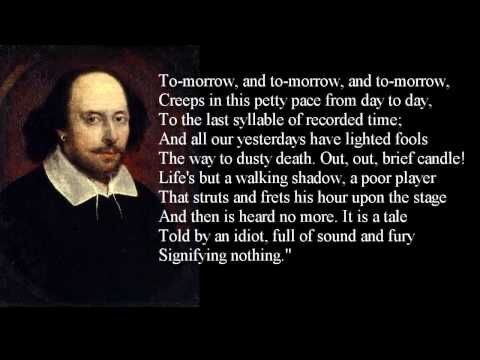
And there’s that little nagging thought — that not-so-slight possibility — that when . . . or if . . . I do finally put the last finishing touches to it, I’ll read it one more time and discover after all that it is, to quote the immortal bard, “A tale told by an idiot, full of sound and fury, signifying nothing.” Every writer’s worst nightmare.
*. *. *
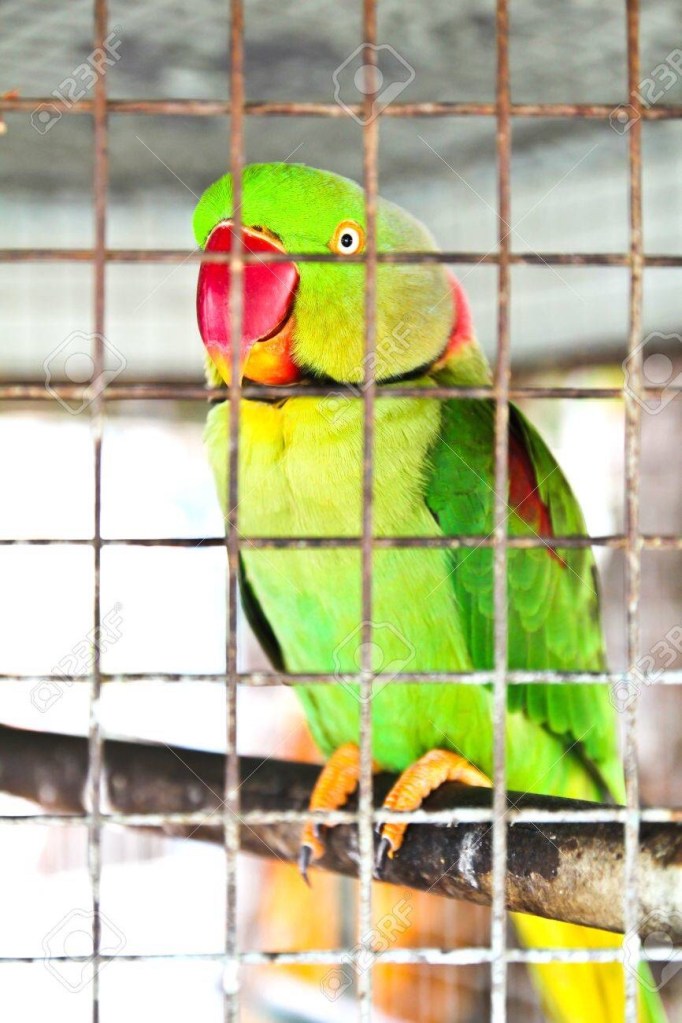
So do you see my problem? I’ve got this book that I’ve nearly written. Now what the hell do I do with it? Do I devote another year of my life to it? Will it still be relevant in another year? Do I just call it a learning experience and file it away? Or maybe I’ll just buy a parrot and line its cage with those marked-up pages. Then I could teach the bird to call me “Dummkopf,” because that’s how I would feel at that point. It’s not writer’s block; it’s a G**damned roadblock!
Seriously . . . I need help.
Just sayin’ . . .
Brendochka
11/2/23
 The Blog About Everything … and Sometimes Nothing