Well, that all depends. Are you ingesting a reasonable amount of heart-healthy olive oil? Or are you an executive in the Russian oil and gas industry? In the latter case, you might want to think about updating your will, sending the wife and kiddies out of the country, and barricading yourself in the safe room, because the life expectancy of the top brass at companies like Rosneft, Lukoil and Gazprom is dropping exponentially, almost day by day.

Two days ago, Lukoil, Russia’s second-largest oil company, announced the sudden death of its chairman, Vladimir Ivanovich Nekrasov, at the age of 66. In its public statement, the company said: “According to the preliminary conclusion of doctors, death occurred as a result of acute heart failure.” A request by CNN for further comment from the company was declined.
You’re probably thinking there’s nothing strange about a person dying of heart failure at any age, right? True enough. But consider: 1) that Nekrasov’s immediate predecessor at Lukoil, Ravil Maganov, died just over a year ago after falling out of a hospital window in Moscow, according to Russian state media; and 2) that “Lukoil . . . made headlines in March 2022 when it became one of only a few Russian companies to take a public stand on Moscow’s full-scale invasion of Ukraine. In a statement to shareholders, customers and staff, Lukoil’s board of directors called ‘for the soonest termination of the armed conflict’ in Ukraine.” [Mark Thompson, CNN, Oct. 24, 2023.]
Consider also the death this week of Olga Nazarenko — not an oil company official or employee, but an outspoken Russian anti-war protester, who also allegedly took a “fall from a height.”
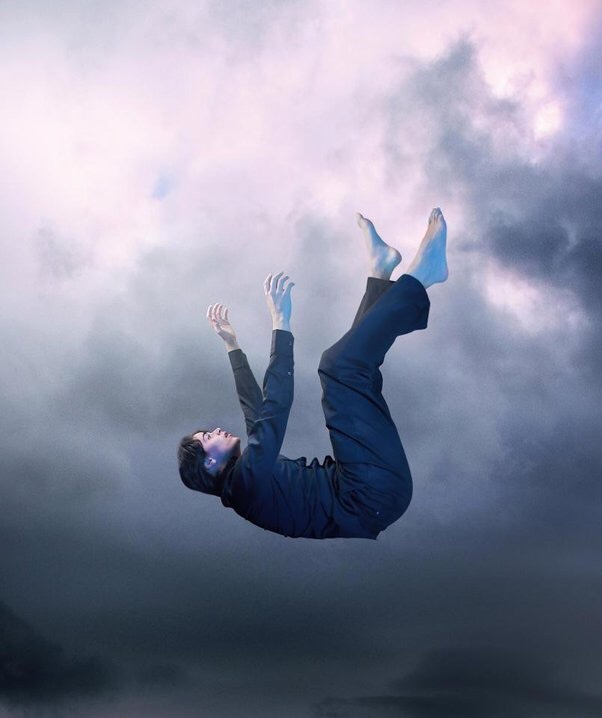
In September of 2022, it was reported that “At least eight prominent Russian businessmen have reportedly died by suicide or in as yet unexplained accidents since late January, with six of them associated with Russia’s two largest energy companies. Four of those six were linked to the Russian state-owned energy giant Gazprom or one of its subsidiaries, while the other two were associated with Lukoil, Russia’s largest privately owned oil and gas company.” The article went on to say that “Earlier this year [2022], the company took the unusual public stance of speaking out against Russia’s war in Ukraine, calling for sympathy for the victims, and for the end of the conflict.” [Ivana Kottasova, CNN, Sept. 2, 2022.]
Mr. Maganov was included among those eight persons. At the time, Lukoil said that he had “passed away following a severe illness,” with no mention being made of a fall.
In May of 2022, Aleksandr Subbotin, another top Lukoil manager, was found dead near Moscow after reportedly visiting a shaman’s home. Authorities responding to a call found an unconscious man “suffering from a heart failure” in a basement room used for “Jamaican voodoo rituals” (as reported by TASS, the official Russian news agency).

On January 30, 2022, Leonid Shulman, head of transport at Gazprom Invest, was found dead in his cottage in the village of Leninsky near St. Petersburg, according to RIA Novosti (also a Russian state media outlet); a suicide note was reportedly found at the scene, and the death was being investigated as a suicide.
Less than a month later, on February 25th, another Gazprom executive, Aleksandr Tyulakov, was found dead in his garage. This one was also reported as a suicide.
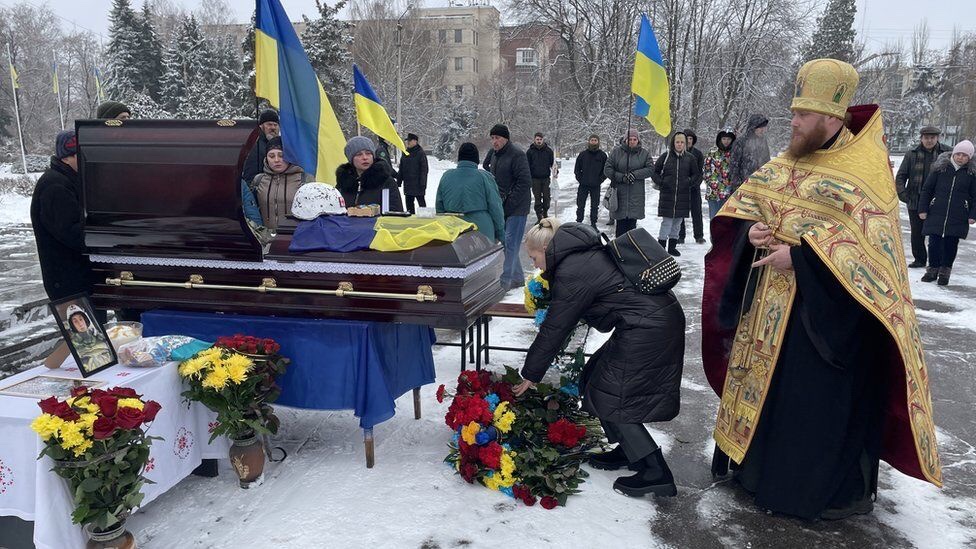
On April 18th of that same year, a report was made of the murder-suicide of Gazprombank former vice-president Vladislav Avayev, his wife and daughter, found dead in their Moscow apartment.
The very next day, April 19th, Sergey Protosenya, a former executive at Novatek — a gas producer partially owned by Gazprom — was found dead in the garden of his home at a Mediterranean resort near Barcelona, Spain. Found inside the home were the bodies of his wife and daughter, “showing signs of having suffered violence.” The case was investigated by the Catalan police, who concluded that the deaths were a double murder and suicide.
Also outside of Russia, a Ukrainian-born Russian oil and gas billionaire, Mikhail Watford, had been found dead in his home in Surrey, England, on February 28, 2022. Surrey police found nothing suspicious about his death.
Back in Russia, Vasily Melnikov, the owner of a medical supply company, was found dead alongside his wife and two young children in Nizhny Novgorod in late March. All had been stabbed to death. The investigative committee did not return CNN’s request for comment, but said at the time of the incident that there “were no signs of unauthorized entry into the apartment,” and that “knives were found and seized . . . [Investigators] are considering several versions of what happened, including the murder of the children and wife by the head of the family, followed by self-inflicted death.” [Ivana Kottasova, CNN, Sept. 2, 2022.] The report did not mention the number of stab wounds Mr. Melnikov had allegedly inflicted upon himself.
*. *. *
The litany of cases continues into 2023, with such people as Kristina Baikova, vice-president of a Russian bank who — whoops! — fell to her death from a window in her 11th floor apartment in Moscow on June 23rd. This was the same day Yevgeny Prigozhin and his Wagner Group began their ill-fated march on Moscow. Any connection? Who knows?
Artyom Bartenev, a judge appointed by Putin, was found dead after — oh, no! — falling 12 stories from his apartment window in Kazan on June 8th.
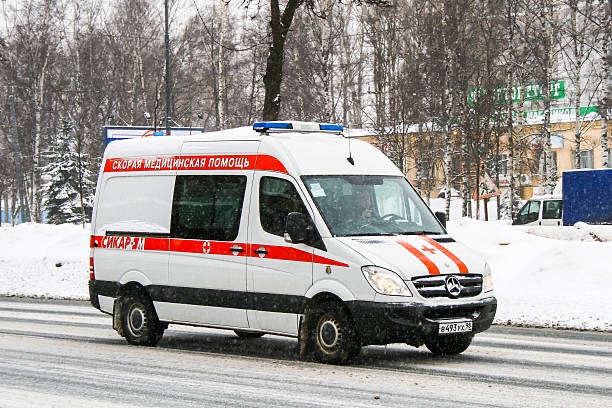
On May 20th, Pyotr Kucherenko — a senior Russian official who had previously made the mistake of publicly criticizing the Russian occupation of Ukraine — fell ill on a flight from Cuba to Russia. The plane made an emergency landing in the Russian town of Mineralnye Vody, where “doctors tried to save him” — and obviously failed, as Mr. Kucherenko did not survive. No cause of his illness was given.
*. *. *
I have a list of more than 30 such incidents, just in the past year, but I think you’ve gotten the point by now. What stands out is the number of these unexplained incidents being written off as accidents (falling from windows has become a favorite), suicides, or heart attacks (the old Soviet standby).
And let’s not forget the recent high-profile cases of Alexei Navalny (poisoned, successfully treated in Germany, then arrested back in Moscow for “violation of parole” and still serving a lengthy sentence for alleged “corruption”); and Yevgeny Prigozhin, head of the mercenary Wagner Group, who voiced complaints about the Russian military’s handling of the war in Ukraine and attempted to march on the Kremlin in protest, and then — like so many others — also died in a fall from a high place . . . but this time, more dramatically, in an airplane.
Either Russia has a remarkably high number of very careless or very depressed people occupying high positions in government and industry; or someone — someone who doesn’t care who knows it — is killing off those who dare to misspeak.
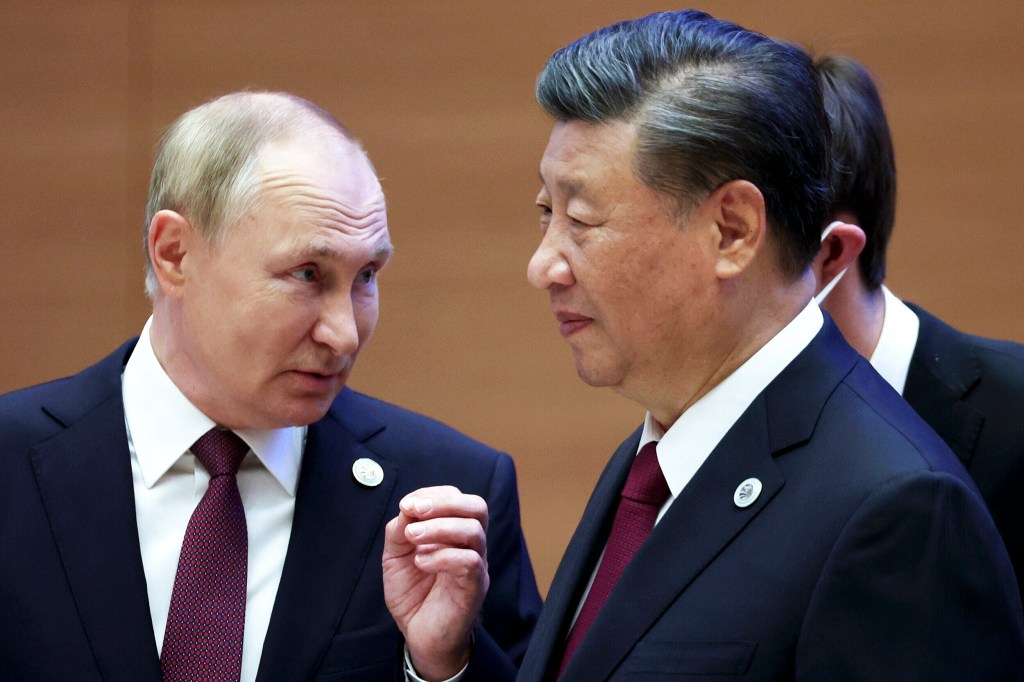
And the point of all of these gruesome statistics? Merely to emphasize the limitless extent to which Vladimir Putin will go in protecting himself and defending his administration. Simply stated: In today’s Russia, it is illegal — and obviously dangerous — to criticize Putin, to speak in defense of Ukraine, or even to call Russia’s “special military operation” what it really is: a WAR. Russia has once more become a totalitarian state, with a narcissistic autocrat at its helm, reinforcing ties with other autocratic leaders around the world.
*. *. *
There are those in influential positions in our very own U.S. government and industries today who have fallen under Putin’s sway and who believe his blatantly bullshit propaganda. And that is most terrifying of all.
Just sayin’ . . .
Brendochka
10/26/23
 The Blog About Everything … and Sometimes Nothing