If only time travel were possible . . .
Think about it. Isn’t there at least one time in your life you’d like to revisit? Not to change things, but to relive it because it was so wonderfully memorable the first time and you mourn the fact that it will never happen again.
For me, it would be the summer of 1993, when I lived and worked in Moscow — the one in Russia, not Idaho. (Yes, there is a Moscow, Idaho.) What I have already written about that summer, in the early days of this blog, was largely from a political standpoint. So today I’d like to bring back the memories of some of my favorite places and the best times — the ones that show up in my happy dreams, not my nightmares. The ones I would love to be able to repeat. So, off we go on a little guided tour.
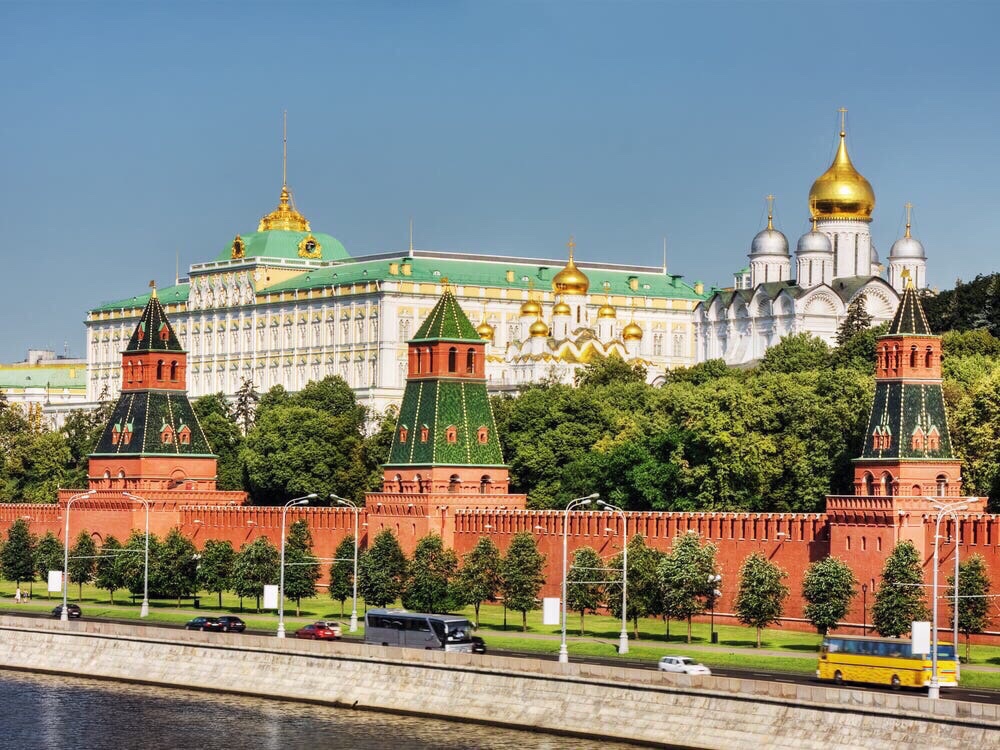
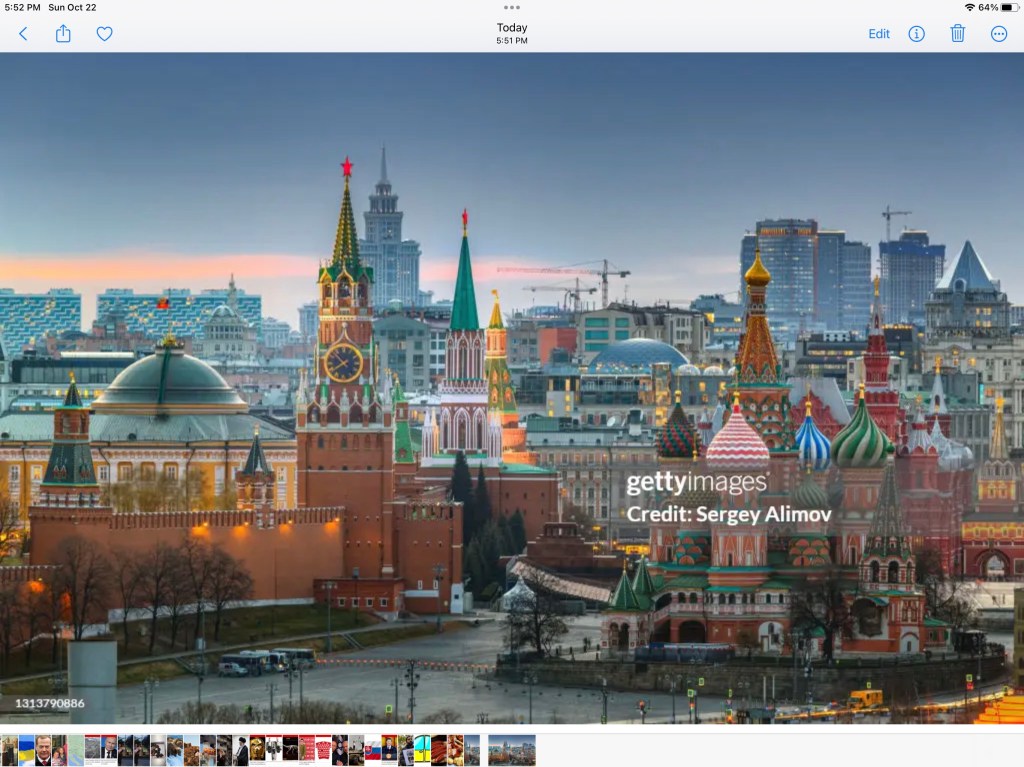
The first thing most visitors are desperate to see when they arrive in Moscow for the first time is, of course, the famous (and notorious) Kremlin — and with good reason. It is nothing short of spectacular. The word “kremlin” means “citadel,” and thus the reason for the supposedly impenetrable walls and towers on all four sides. Inside those walls is a small city, with office buildings; residences for the elite (or so I’ve heard); churches; a theatre (I attended the ballet there once, and they charged me ten times the regular price because I was a foreigner); and the Kremlin Armory, which is a museum containing the most incredible treasures from Russia’s glorious past. It’s the first place I always took my American friends when they visited so I could play the knowledgable tour guide. To me, it perfectly reflects the personality of the Russian government: awesome in its presentation of itself, yet somewhat overblown. But the architecture is glorious and the history fascinating.
*. *. *
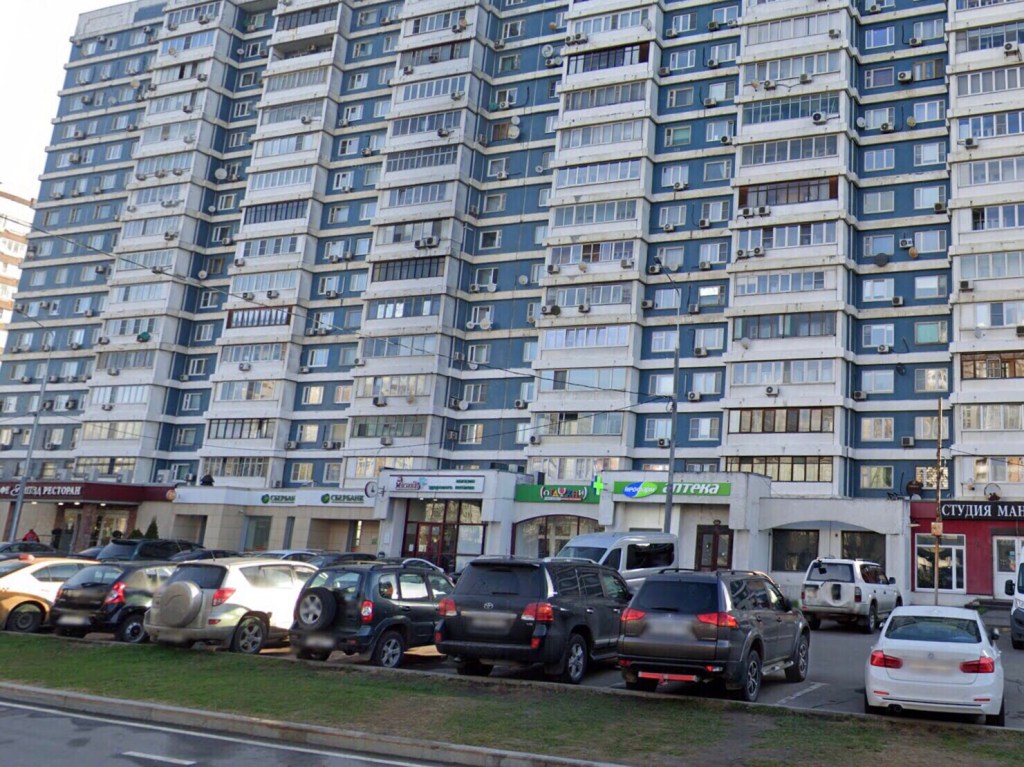
Yup, that’s where I lived for three months. Moscow’s many Soviet-style buildings were obviously designed on the theory that bigger is better. This one, on the outskirts of the city, was (and I assume still is) “owned” by the Ministry of Defense, and is home to many of Russia’s higher-ranking military officers. We (the U.S. humanitarian aid organization with which I was working) rented a large apartment — three big bedrooms, two bathrooms, living/dining room and kitchen — from an officer who had been transferred to Tajikistan, poor man. It served as both our office and my home, with others crashing from time to time when they arrived from the States. As you can see, the ground floor front was occupied by shops, a bank, and a small post office. The residential entrances were in the rear. Unlike our American buildings, there was no single entrance with a big lobby or long corridors on each floor. Instead, there were multiple entrances, each with a small lobby, empty but for a lady seated at a rickety desk, keeping track of the comings and goings of the tenants; and only four apartments on each floor. There was one elevator, which never broke down while I was there; a trash chute that didn’t smell great but never backed up; and a cleaning crew that must have been there because it was always clean, but whom I never saw. Our dezhurnaya (the lady at the lobby desk) was obviously suspicious of the Americans coming and going from our place; but I used to bring her treats from the American market, and she and I eventually reached a sort of detente. She even smiled at me a couple of times — most notably, when I left at the end of the summer.
*. *. *
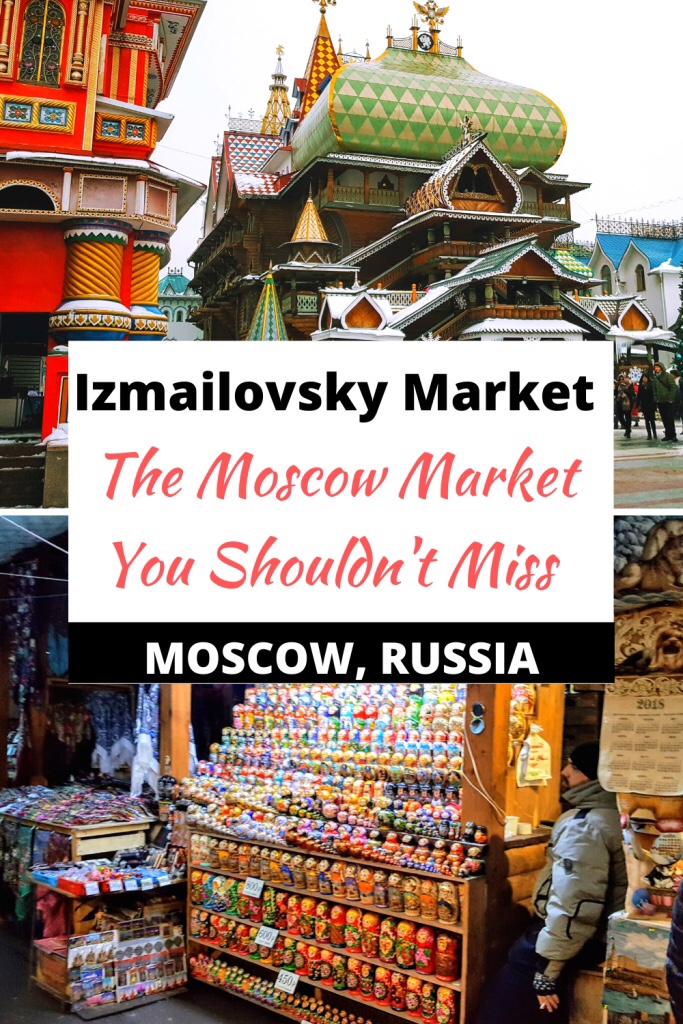
Very briefly, the history of the village of Izmailovo dates back to the year 1389. From the time of Ivan the Terrible (16th Century), it was an estate of boyars (old aristocracy) in the Romanov family. It is now the site of a gigantic park area, with rides and other attractions that were not there in 1993. But there was a huge weekend outdoor market for vendors selling everything from the Matryoshki (nesting dolls) that you see above, to handmade Oriental rugs brought in from the Central Asian republics, to hand-sewn linens, to china and crystal, to jewelry, to tacky souvenirs. I decorated our apartment with several of the smaller rugs, and brought home to the States a beautiful embroidered linen tablecloth with napkins, and a number of the nesting dolls. Mostly it was just fun wandering among the kiosks and chatting with the vendors, who at that time were curious to meet an American woman who spoke a little Russian and had the chutzpah to live in Moscow.
*. *. *
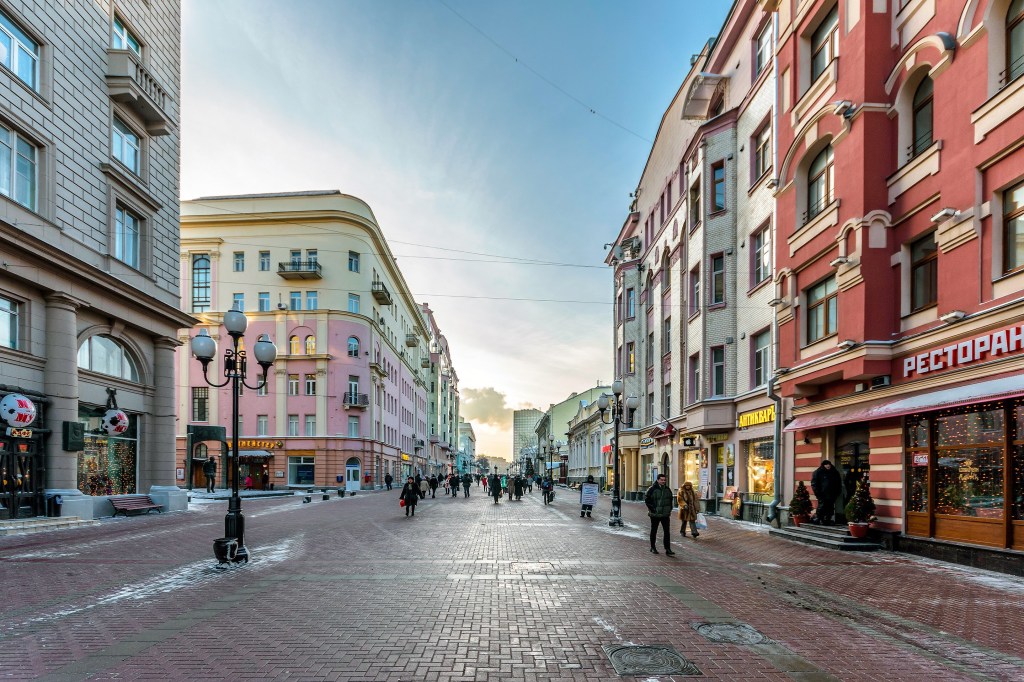
A lovely, historic street in central Moscow, the Old Arbat (yes, there is a New Arbat) is beautifully preserved, a place where modern architecture is not allowed. The shops may have changed since 1993, but the buildings haven’t. In fact, that pink-and-white building on the left side of the street, with the rounded corner, is where I saw my very first CCTV camera, on my first visit in 1988. Of course, I smiled and waved at it, then wondered if I’d be spending time in a Russian prison for some stupid infraction of an unknown law. But that didn’t happen; I was probably written off as just another obnoxious American tourist.
*. *. *
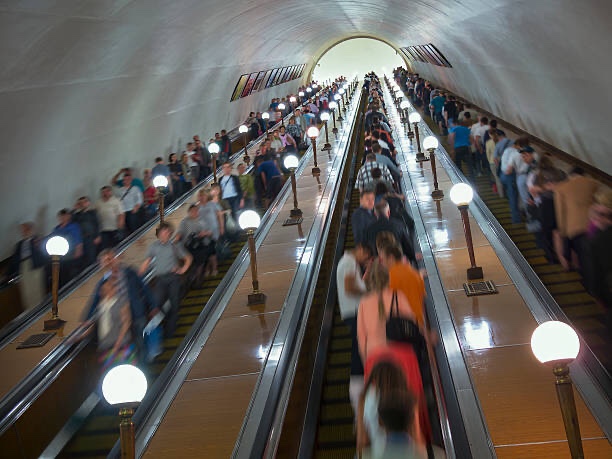
The Moscow Metro escalators are not only terrifyingly long and steep; they’re incredibly fast. You literally have to jump on and off to keep from being bumped from behind. Some were originally built as temporary bomb shelters during Soviet times, with their own water system and power generators. But a direct bomb hit could have caused the entire structure to collapse, so who were they kidding? It was a wonderfully efficient Metro system, though, and I rode it quite a bit; the nearest station was only about a kilometer from my apartment building.
*. *. *
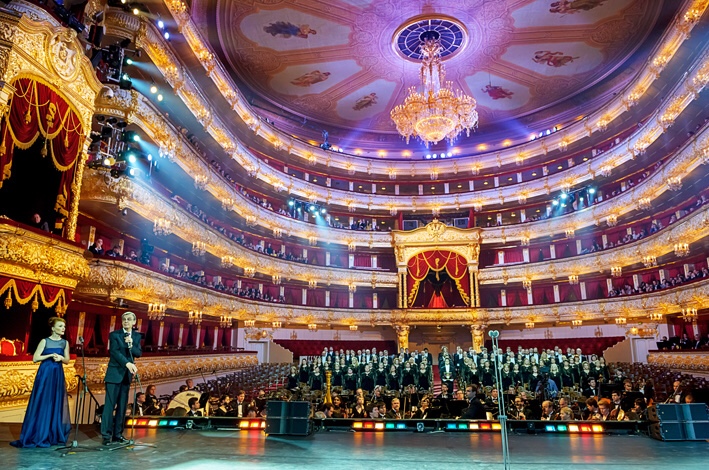
One of the great thrills of my life was being able to acquire tickets to the opera at the Bolshoi — again, at “foreigner” prices. My friend and I arrived a little late (our driver was stopped by the traffic police for speeding on the way there), and we had to sit through the first act all the way at the top, in the “cheap seats,” to which we were directed, one floor at a time, via the stairway! But that’s where the less affluent locals were seated, many of them with their children; and watching their faces was a delight. Can you imagine American children being dragged to an opera? We were able to take our reserved seats in the orchestra section after the first intermission, but I rather missed the little kids. During the second intermission, we mingled with the other audience members and sipped champagne in the lobby. It all felt a little dreamlike, and still does.
*. *. *
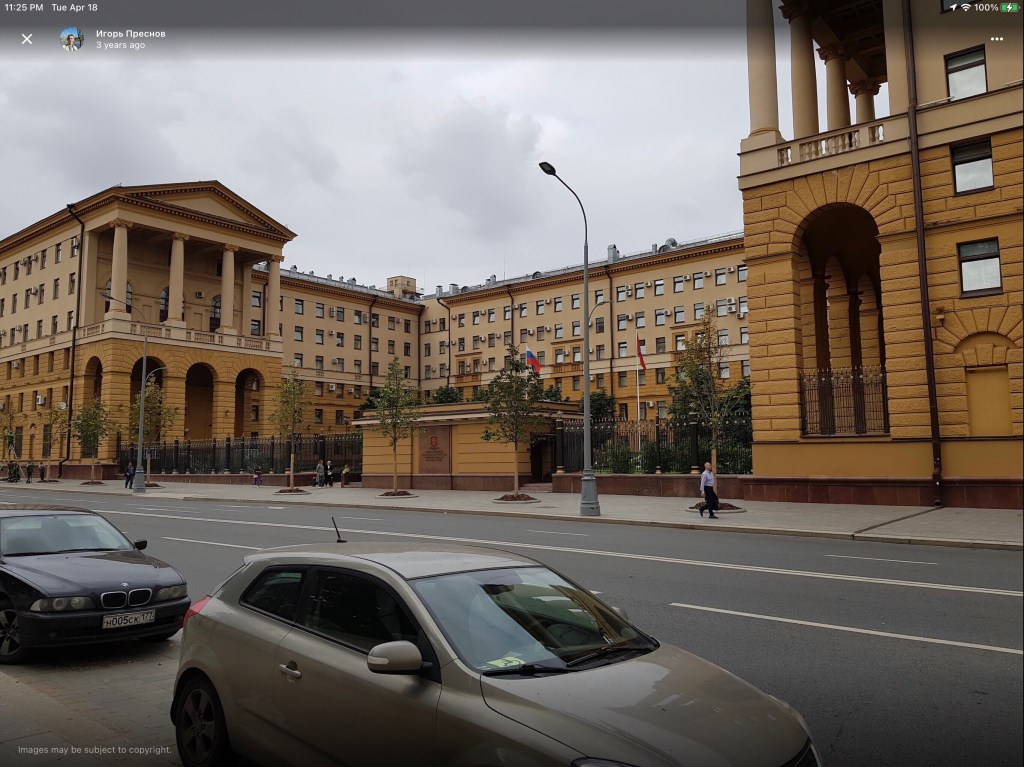
Known by its address, 38 Petrovka Street, Militia Headquarters is one of Moscow’s scariest locations — right up there with the Lubyanka and Lefortovo Prisons. Muscovites used to say (and probably still do) that too many people have been seen going inside and never coming out again. I was there, a couple of times, and — as you can tell — I survived. In fact, I even had lunch there. Those stories are quite funny, actually, and you will find the details in Chapters 17 and 21 of this blog (“An Unholy Triumvirate,” 4/6/23, and “The Bones In the Basement,” 5/4/23). They’re two of my favorite memories of that summer, mostly because I don’t know another person (other than the three who accompanied me on those occasions) who can say they’ve “been there, done that.” Anyway, I just thought I’d share the photo, and maybe pique your interest in reading a bit more.
*. *. *
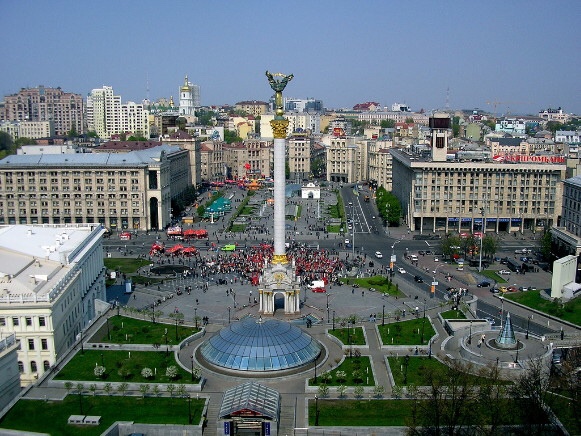
I made two trips to Kyiv that summer on Foundation business, and I’m so glad now that I was able to see it at its best. I traveled by overnight train, and each trip was an adventure (also detailed in an earlier blog post). But two other experiences stand out — one happy, one not so much. The first was meeting a wonderful new friend, who eventually moved with her husband, two children and mother to the Washington area. The other was a visit to a hospital for child victims of the Chernobyl nuclear accident just seven years earlier — an unimaginable tragedy that left its mark, both physically and mentally, on an entire generation . . . and beyond. It has also left its mark on my soul.
*. *. *
And finally . . .
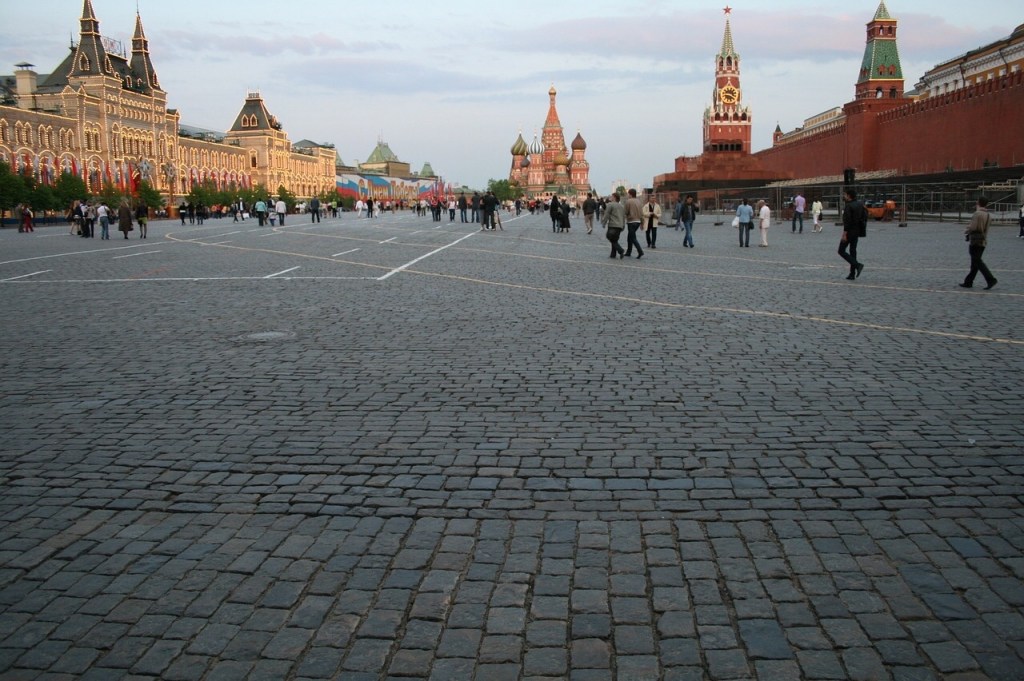
First of all, it’s not a square at all; it is a rectangle, and a very long one at that. After all, it had to accommodate all of those Stalinesque military parades, didn’t it? Straight ahead, at the far end, is St. Basil’s Cathedral, ordered built by Ivan the Terrible in the 16th Century. Legend has it that the architect was then blinded so that he would never be able to create another structure of equal or greater beauty. To the right is one side of the Kremlin Wall, and to the left, the famous GUM “department store,” which is actually a huge, multi-level, indoor shopping mall — very upscale now, I understand. Not so when I was last there.
For some reason, at the end of each trip to Moscow (August 1988, February ‘92, February ‘93, summer ‘93, and February ‘94), I made it a tradition to visit Red Square one last time before leaving town, to say farewell to Moscow and to promise that I would return — my own version of Rome’s Trevi Fountain. For reasons too complex to explain here, I wasn’t able to pay that superstitious farewell visit in 1994.
I never saw Moscow again.
*. *. *
I hope you’ve enjoyed visiting some of the choice bits of “my” Moscow, as I remember it still, some 30 years later. If I’ve inspired you to travel there . . . don’t! I was there during the Gorbachev and Yeltsin years of post-Soviet glasnost and perestroika. These are the Putin years, and my Moscow — my Russia — no longer exists. And that breaks my heart. Maybe circumstances will change for the better in the future; we can only hope! In the meantime, I have my lovely memories.
TTFN,
Brendochka
10/24/23
 The Blog About Everything … and Sometimes Nothing