As I was perusing the latest news in search of someone I could skewer for today’s blog, guess whose name jumped out at me from the headlines. If you guessed Elon Musk, you’d be right. His new biography by Walter Isaacson (I’ve started it, but have only read around 100 of the over 600 pages) appears to have revealed all sorts of fascinating facts about this man whom everyone loves to hate, and no one really understands. So let’s look into the most recent revelation to have made the headlines.
Although it turns out to be something that one of Mr. Musk’s companies, Neuralink, has been working on for about five years, this all comes as news to me. (Whether it hasn’t been publicized, or I’ve just not been paying close attention, I don’t know; but it doesn’t really matter.) According to Mr. Isaacson — who shadowed Mr. Musk, apparently everywhere but to the bathroom, for two years — this idea “was inspired by science fiction authors such as Iain Banks to pursue a ‘human-machine interface technology called “neural lace” that is implanted into people and can connect all of their thoughts to a computer.’”
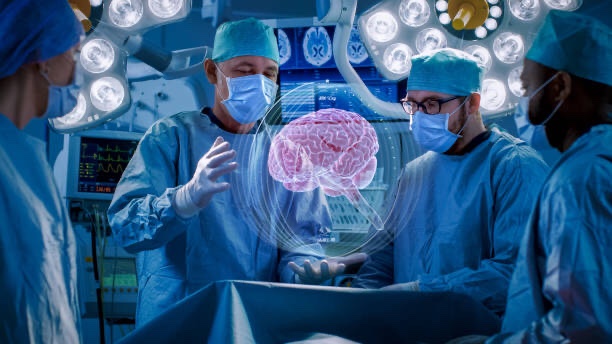
My mind, which sometimes works in bizarre ways, immediately jumped to the image of Frankenstein and his nameless monster. But in this case, I think that’s understandable, in light of Mr. Isaacson’s reference to science fiction. Indeed, in the first 100 pages of his book, I have learned a good deal about Mr. Musk’s early years and the many ways in which his adult life has been affected by his rather . . . let’s just say . . . difficult childhood.
From a very early age, he was completely absorbed by — and perhaps took refuge in — science fiction stories, arcade games, and the like. So it doesn’t seem at all strange to me that he would have grown into a man who has been obsessed with such seeming “fantasies” as electric cars, electronic payment and banking programs, and StarLink satellite internet . . . not to mention his plan to colonize Mars. The odd thing is that he seems to be able to make his dreams a reality. Of course, the Tesla vehicles do still have some glitches, and it will be quite a while before we’ll actually be setting up housekeeping on Mars. But he’s getting there. He may be off-the-wall in some respects, but he’s also brilliant in ways that most of us can’t begin to comprehend. And if the accumulation of wealth is a reliable indicator of his abilities, well . . . need I say more?
Apparently, the Neuralink people have thus far experimented only on animals (I wonder if the folks at PETA know about this yet), but they have just opened up recruitment for their first human clinical trial. Uh-oh. Maybe we’d better take a look at what’s involved.

According to the CNN news item:
“After receiving approval from an independent review board, Neuralink is set to begin offering brain implants to paralysis patients . . . to evaluate both the safety and functionality of the implant.
“Trial patients will have a chip surgically placed in the part of the brain that controls the intention to move. The chip, installed by a robot, will then record and send brain signals to an app, with the initial goal being ‘to grant people the ability to control a computer cursor or keyboard using their thoughts alone,’ the company wrote.
‘Those with quadriplegia due to cervical spinal cord injury or amyotrophic lateral sclerosis (ALS) may qualify for the six-year-long study . . .’” [Jennifer Korn, CNN, September 20, 2023.]
I don’t know how one could find a single thing wrong with their goals. Helping seriously disabled people function independently is vitally important and incredibly noble. But is it feasible yet, or is it still science fiction, or perhaps somewhere in the middle? And I’m not sure how I feel about a computer chip being implanted in my brain by a robot that is itself nothing more than the housing for yet another computer chip.
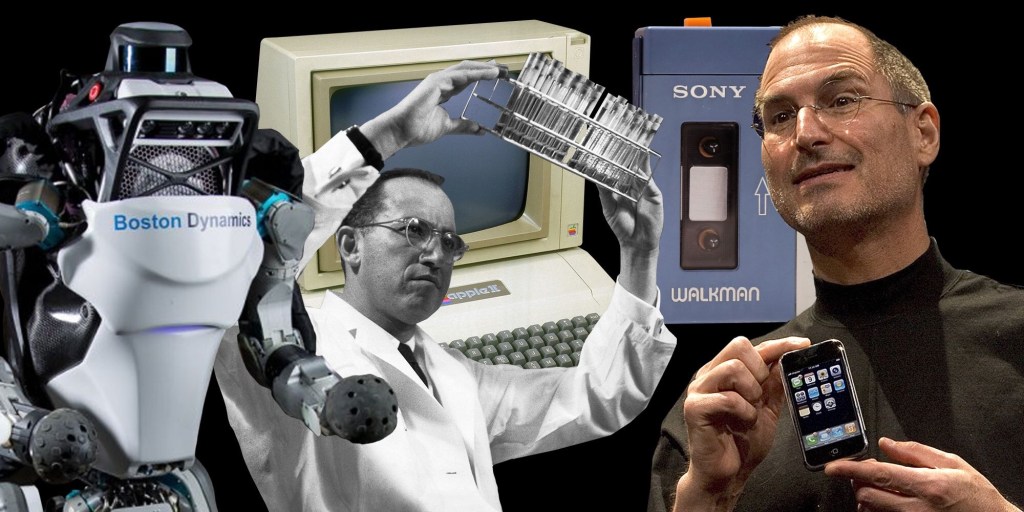
Still, consider the things we take for granted today that were once unimaginable: “flying machines,” television, electricity, telephones . . . and yes, all types of surgery and preventive medicine. But the visionaries and innovators kept at it until they succeeded, and today we can watch a war as it takes place thousands of miles away, fly across the country in four hours, or save a life with a donor kidney. So why not a chip that can type?
But one thing concerns me: whether perhaps, in his eagerness to make this available to as many people as possible as quickly as possible, Mr. Musk might be pushing his miracle chip into use before it’s ready. He tends to move at warp speed once he gets it into his head to do something, and that can be a very dangerous thing when you’re messing with people’s lives.
The company sought FDA approval for human testing in 2022. “At that time, the agency rejected the bid, according to a March Reuters report, citing safety concerns about parts of the implant migrating to other parts of the brain and possible brain tissue damage when the devices are removed. Musk said at a December recruiting event that Neuralink has submitted ‘most’ of its paperwork to the US Food and Drug Administration and could begin testing on humans within six months.
”But employees told Reuters in December that the company is rushing to market, resulting in careless animal deaths and a federal investigation.” [Jennifer Korn, CNN, September 20, 2023.]
(In all fairness, I note that the article says nothing about what steps may have been taken since last December to cure or mitigate any of the alleged issues.)
So here we have the visionary Elon Musk vs. the sometimes over-eager Elon Musk, who occasionally needs to be reined in for his own sake and the sake of the many people whose destinies will be affected by his actions. He is a man who wields great power, but sometimes seems unaware of the extent and the possible negative effects of that power. And that’s what worries me.
Just sayin’ . . .

Brendochka
9/23/23
 The Blog About Everything … and Sometimes Nothing