Congratulations! You’re a high school graduate. It’s 1955, and you are just 16 years (and 3 months) old. You’re a nearly straight-A student, but you lost out on that scholarship . . . to a BOY! But he’s a good kid, smart, and deserving, so it’s o.k., really. And now it’s decision time. Your mom can only manage tuition at the nearby state university, and only if you live at home and commute, but you don’t have a car. And you know she can’t really afford it anyway. You have good office skills, and could work and contribute to the household expenses. And you’re really antsy to join the adult world — at the ripe old age of 16. So what do you do?

I’ll tell you what I did: I made a deal with my mother. I said I’d look for a job over the summer, and if I found one I loved, I’d stay with it. I could always go to college in a year or two — or take classes at night. And if I didn’t find the perfect job, I’d enroll in some regular classes in the fall. I couldn’t believe she went for it, but she did. It must have been the money thing.
A friend of hers knew a woman who ran a small employment agency, and arranged for me to meet her. The lady tested my shorthand and typing skills — absolute requirements in 1955, remember — and said she had just the thing for me: a job with a small, but prominent and very well-respected Washington law firm desperate for someone to fill a position working for a junior partner. To make a long story short, she added a year to my age, I interviewed, they hired me on the spot, and I started work the following Monday. They really were desperate. Three days out of high school, still just 16 years (and 3 months) old, and I was not just a secretary, but a legal secretary, at a starting salary of $60 a week. Law firms in Washington always have paid very well.
But this story isn’t really about me; it’s about the passage of time and how things have changed . . . sometimes for the better, and sometimes not.
*. *. *
So what were offices — and specifically law offices — like in those days? To begin with, the practice of law was still about service to the client: gathering facts, negotiating honestly, and ensuring a fair resolution for all parties. The law firm’s bottom line was secondary. Not so much like today’s profit-driven corporate mentality.
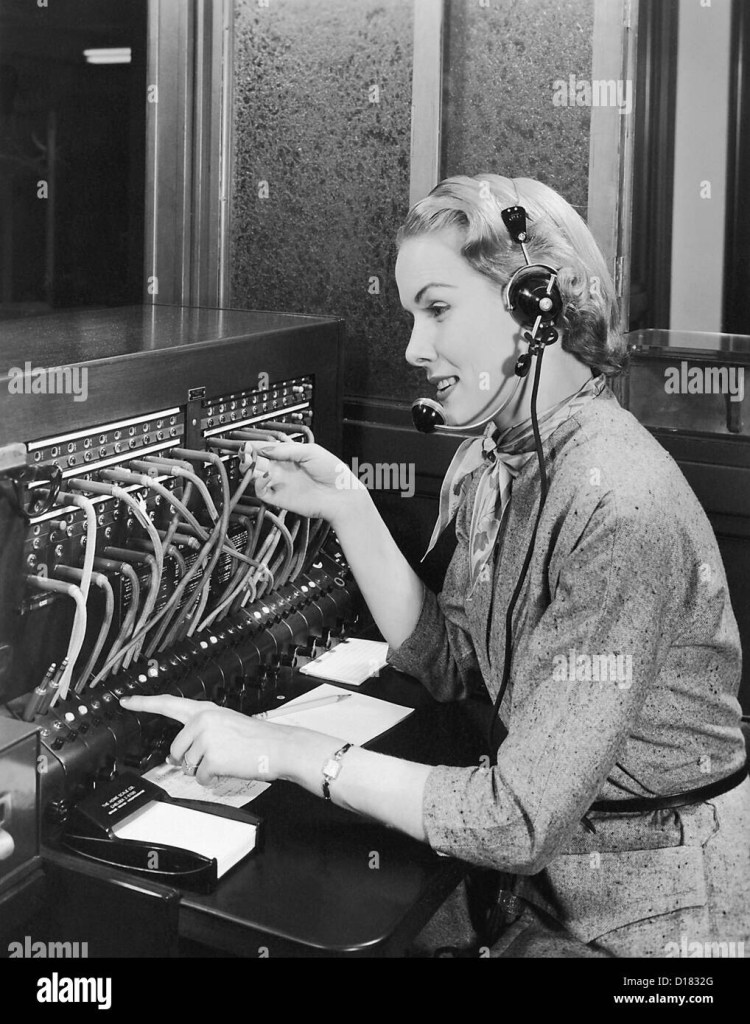
The larger firms were more regimented; but our office was small — just nine attorneys, five secretaries, one law clerk, and a receptionist — better known then as a switchboard operator. It was a family. And work was actually fun. Our office was on the fifth floor of the old Rust Building at the corner of 15th and K Streets, N.W., in downtown Washington, D.C. It had two elevators, manually operated by two young men who knew every occupant’s name, were always happy to run an errand or two, and were well remembered at Christmas every year. The building’s air-conditioning “system” consisted of window units in each room. There was one bathroom for the whole office, unisex. The “kitchen” was a coffee machine and a mini fridge in a closet; the supply room was a slightly bigger closet.
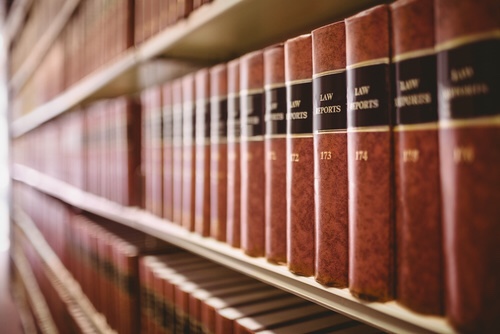
We had our own law library — not a very large one, so that we sometimes had to borrow books from some of the bigger firms, or run down to the U. S. Courthouse or one of the law schools to use their libraries. I immediately fell in love with the smell of all of those leather-bound books, and set about learning what each one represented.
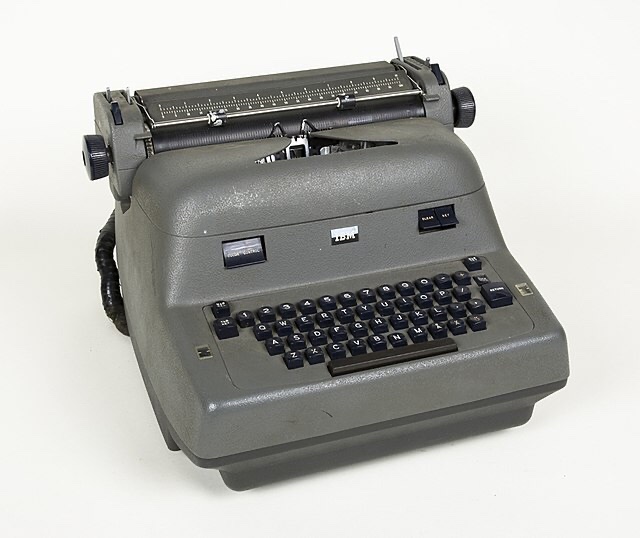
My “computer” was an IBM electric typewriter — very high-tech for those days. Changing the ribbon each time it ran out was messy work, but this was before the days of snap-in ribbon cartridges. The IBM service guy came regularly as per our contract, and was on call when anyone had a mechanical problem — the early version of today’s IT specialist. But I couldn’t always wait for him, so I figured out how to fix the simpler issues myself. Sort of like changing your own oil in a ‘55 Chevy.
Of course, there was no such thing as electronic court filings in those days. All legal documents had to be typed in multiple copies: the original to be filed at Court, with carbon copies for each party’s attorney, of which there could be several. And yes, I said “carbon,” as in carbon paper. By the time you got to the fifth or sixth copy, it was barely legible; and if you made a mistake . . . well, that’s what typewriter erasers were for — and for the bigger mistakes, there was White-Out. This was also a time before Xerox made copiers.
And then, one wonderful day, it wasn’t. I distinctly recall our first copier: a tabletop model, with a two-step process. First was the photographic step. You put your page between two sheets of specially treated paper, and slid it into the slot where an eerie green light glowed and projected outward as a picture was taken of the original. I remember one of our attorneys jumping back in horror, saying, “Omigod! Is that going to make me sterile?” We all laughed, but he was only half joking. Actually, I don’t think we ever got an answer to that question, but I do know that he and his wife never had a third child.
Anyway, you then carefully removed your original, and fed the two blank sheets of paper, one on either side of a metal plate, into the developing liquid. Uh-huh . . . I said liquid. And when the two pages emerged from the other side, you peeled them apart and VOILA! . . . there was your copy, still damp but perfectly clear. It was a sort of supersized version of a Polaroid camera, and it was miraculous.
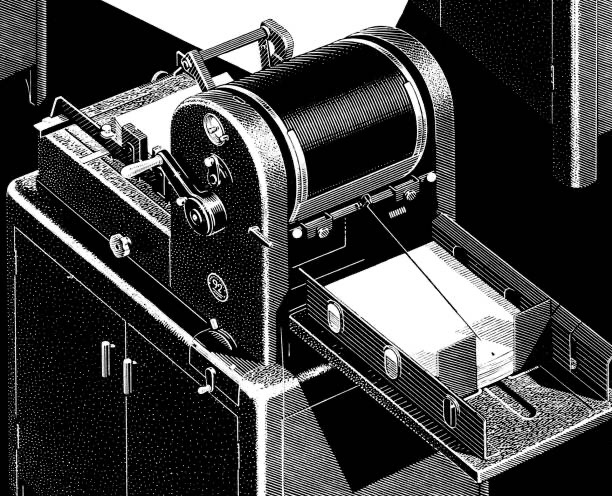
So, great — we had something that would copy one page at a time, taking about two minutes per page. But what if you had a 50-page brief to be copied in multiples? Well, that’s where the mimeograph machine came into play. We didn’t have one in the office, but I recall many a trip to the U.S. Courthouse to use theirs. I won’t even begin to describe the process, but it was a hell of a lot faster than that two-step thing. The only problem was that you first had to “cut the stencils” — those waxy green or blue sheets on which the letters were actually cut by the typewriter keys as you typed so that the ink in the machine would pass through onto the paper. And there were no “Delete” or “Undo” keys, so your typing had to be perfect. Sound like fun? Nah . . . not so much.
*. *. *
Obviously, routine tasks took a lot longer back in 1955 than they do today. But there is much to be said for that. Not everything had to be done yesterday. There was a recognition of the fact that human beings can only accomplish so much in a given period of time. And our nervous systems were the beneficiaries.
We also took time to go out to lunch together and talk to one another — not just about work, but about our lives, our likes and dislikes, our ups and downs. We were friends, sharing each day, and sincerely caring about each other. When one man’s wife passed away, we closed the office so everyone could attend the funeral. When someone was ill, the others checked up on them. And when someone got married, or had a baby, or a birthday, or for any other reason . . . we all celebrated.
There was also an acceptable business dress code — not just in Washington, or in law firms, but in all offices. Men wore suits, dress shirts and ties, even on the hottest summer days. And women were required to wear dresses, or suits — with skirts, never pants — and shoes with high or medium heels, nylons, or later, panty hose. Gloves and hats were optional, but looked on favorably. We were professionals and we dressed the part.
That job was where I really did join the adult world. I learned to swear; I learned to drink; I learned to fend off unwanted sexual advances; and I learned to think like a lawyer. I also learned the meaning of friendship, and of empathy, and of giving. I grew up during my seven years at that firm, and when it was time to move on, I was truly sad to leave.
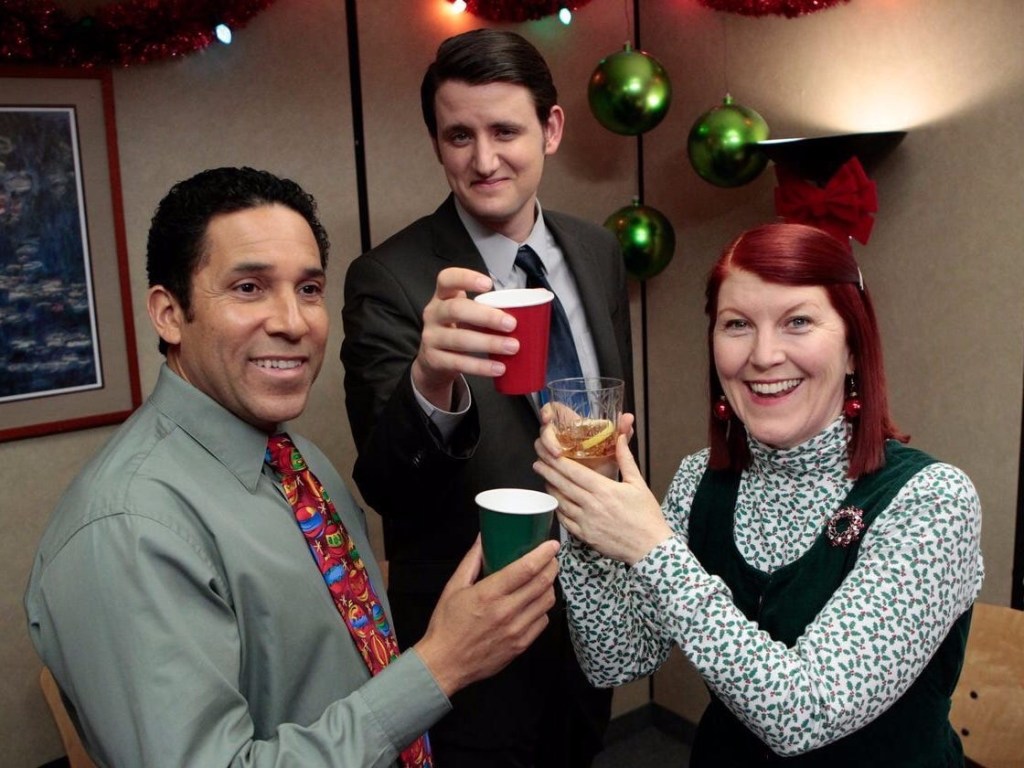
Most office environments today can’t compare to that little law office, and the world is poorer for it. Would I go back to those more primitive times? You know . . . I think I might. But only if I could have my flat-screen computer with dual monitors, my laser printer, and that big copier that sorts up to 25 sets at a time, and the kitchen with the big fridge and the two microwaves, and . . .
Okay, so maybe I wouldn’t go all the way back. But it’s fun to remember the good old days. In so very many ways, they really were good, and I’m so glad I had the chance to be part of them.
Just sayin’ . . .
Brendochka
8/20/23
 The Blog About Everything … and Sometimes Nothing