I have surprisingly clear memories of my earliest school years, which, unlike most kids, I actually loved. Maybe because the principal, Margaret Thompson, was my mother’s best friend so I got away with a lot of stuff.
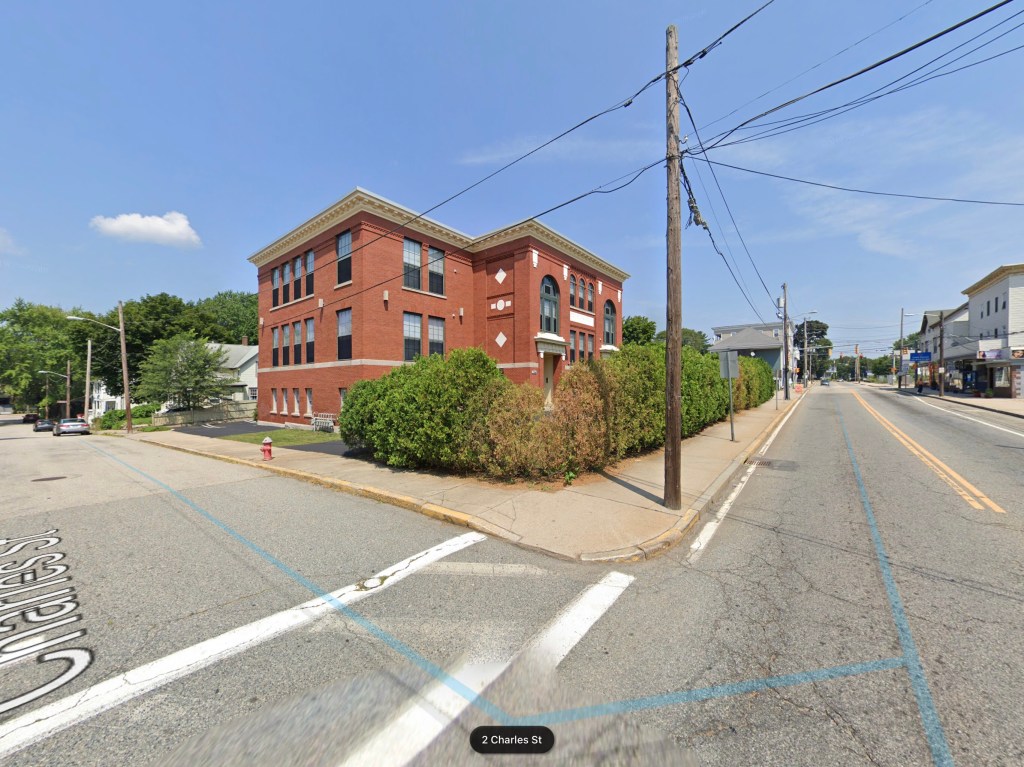
And there it is, still standing: my elementary school until we moved away when I was nine. It’s been enlarged, with a more modern addition to the front, and I’m not sure it is still used as a school, but it’s basically the same red brick building I remember.
Our classes, by today’s standards, were, quite literally, elementary. We had Arithmetic — math was for high school and college; English — which included grammar, spelling, vocabulary, and sentence structure, as a result of which I still can’t split an infinitive or end a sentence with a preposition without experiencing major guilt; American History — when Native Americans were still referred to as Indians; Geography — we knew all 48 state capitals (Alaska and Hawaii hadn’t made it onto the flag yet); Science — mostly plants, as I recall, and we did learn the difference between an insect and an arachnid, but nothing about reproduction; and a separate course for Penmanship. Yes, I can write cursive. I can also read a non-digital clock, but that’s a whole other matter.
There were also weekly classes in Art and Music, neither of which I had any talent for (there’s one of those sneaky prepositions again!), but they were just for fun. And every day started with a recitation of the “Pledge of Allegiance” to the American flag, and the Lord’s Prayer. I guess there were no atheists then — or if there were, they didn’t talk about it. And no one paid much attention to that little Constitutional thing about separation of church and state.
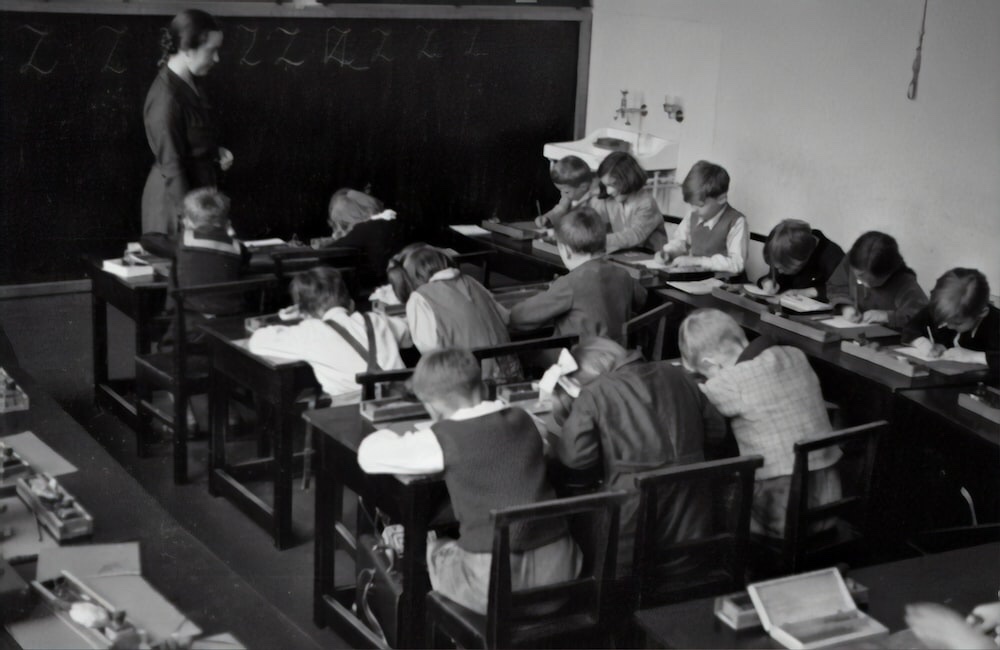
Also, we didn’t have “winter break” — we had Christmas vacation. And we sang Christmas carols in music class, and drew pictures of Santa Claus and Christmas trees and the baby Jesus in art class. No one cared that I was the only Jewish kid in my class . . . least of all me. We couldn’t have a tree at home because of my grandparents, so I got my Christmas fix at school.
We didn’t have school buses in our town back then; we had neighborhood schools, and we walked. My sister was four years ahead of me in school, so until I finished second grade, she was able to walk with me; but after that, she was in junior high halfway across town. So at that point I decided I could walk to school and back by myself. Picture this little bitty six-year-old, strutting my stuff for nearly a half mile along a couple of our neighborhood’s busier streets, crossing at an intersection with no traffic lights, and refusing to let my mother come with me because I was not a baby, thank you very much. And as I rounded the last corner by the Catholic church, there she was, halfway down the block, anxiously waiting to see my little head with its curly blond hair come into view. I can’t believe she actually let me get away with doing that. But those were different times.
I clearly remember my first day of school, when my mother had to accompany me for registration. She was so sure I was going to be traumatized — what we now call having “separation anxiety” — and I’m sure she was terribly disappointed when I told her she could leave now. There was one little girl, Norma something, who was crying her eyes out, and I recall thinking how silly she was because there was nothing to be afraid of. It was just school. I have to wonder: if I hadn’t had a big sister, would I have been so brave?
*. *. *
Did you know that our female teachers — and all our elementary school teachers were women in those days — could not be married? That was the case in my school district, at least. If a teacher should happen to want a family of her own, she had to quit teaching. I guess it was because a married female teacher might become pregnant, and that would raise that whole reproduction question, and we certainly couldn’t have that, could we? As a result, most of the women teachers were — sorry to say — middle-aged and unattractive. And frequently cranky. Except for my second-grade teacher, Miss Fitzgerald, who was young and pretty and sweet. She quit teaching while I was still at that school, so I assume she had met Mr. Right and had a fairy-tale life as a housewife and mother of six screaming . . . oops, sorry . . . lived happily ever after.
*. *. *
Do we want to talk about report cards? Every child’s worst nightmare. And that was especially true for my sister and me, because — as you’ve probably gathered from the title of this chapter — anything less than an “A” was considered a criminal offense, or at the very least a family tragedy. “Bs” were fine for other people’s kids, but not for us, because anything below an “A” — even an A-minus — meant we just weren’t trying hard enough. I got a “B” once in fifth grade — in history, I think — and I can still see the disappointment on my mother’s face as she drew a big circle around that “B,” in ink so that it would never disappear. You’d have thought I had told her I was pregnant! They didn’t worry about our little psyches in those days; just applied the pressure and watched those grades come rolling in. And of course in my house it wasn’t just our parents — it was a family affair for the aunts, the uncles, and the grandparents we wouldn’t want to disappoint, not ever. But we knew, because they told us over and over again, that it was all because they loved us and just wanted us to “succeed” — whatever that meant.
As for the stuff I got away with, it was never anything major, even by the standards of the ‘40s. But I was mischievous and kept my teachers and the principal on their toes, and apparently pretty well entertained. The one episode that sticks in my mind happened when I was in second grade. Once a year, each school was visited by a dentist so that all the children could have a regular checkup — free of charge. I think there must have been a lot of poor (sorry — economically challenged) families in the town, but grownups never discussed those things in front of us kids so I don’t really know; but it was nice that the schools tried to fill the gap. (Ouch, sorry again — bad pun.)
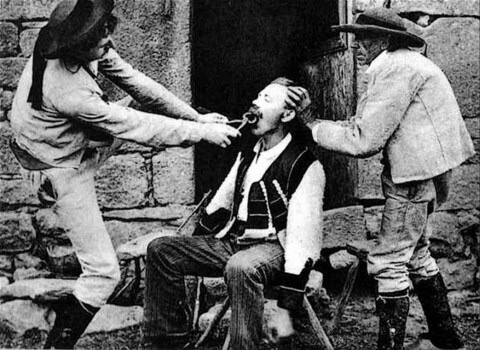
Anyway, the dentist had come to our school and set up shop in a small office just up the hall from my classroom. It happened that our teacher — the lovely Miss Fitzgerald — was called away for some reason and left us on our honor for a few minutes. Bad move, Teach! While all the other students just giggled and threw paper wads at each other, I decided to sneak up the hall to see what was going on with the dentist in the torture chamber. My little friends tried to stop me, but I was obstinate even then, and off I went, tiptoeing as though that would make me invisible. But I had to tiptoe past the first grade classroom, and that teacher — the perpetually cranky Miss Allen — had eyes and ears like bat radar. So of course I was caught and sent to the principal’s office. That’s right: my mother’s best friend, Principal Thompson. Naturally she had to do her duty and call my mother to report my misdeed; but as I was sent back to my class with a stern reprimand, I distinctly heard the two women laughing together on the phone. If the school had given grades for sneakiness, I most certainly would have flunked — I was book-smart, not street-smart. But I worked on it, and I did get a little more proficient over time.
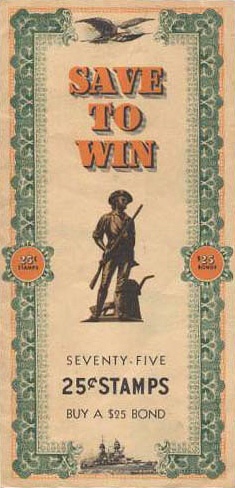
I remember getting an allowance to cover the cost of the little cartons of milk that we bought each day to go with our free school lunches, and the stamps we purchased at school and saved in little paper books to exchange for “war bonds” — government savings bonds given a patriotic name during The War. All of our supplies — books, paper, pencils, erasers — were provided by the school. Free education really was free, except for the milk.
*. *. *
When I was nine and my sister fourteen, our parents told us we were moving to New Hampshire. Although it meant leaving our Bubbe and the aunts and uncles behind, we were both thrilled — she, because she hated her junior high school for some reason; and I, because it was a new adventure. So off we went, heading toward the 1950s and a whole new world of friends, dances, bicycles, piano lessons, swimming classes at the “Y” . . . and puberty. But that last one’s a big one, so let’s save it for another time, shall we? Or maybe never.
Just sayin’ . . .
TTFN,
Brendochka
6/12/23
 The Blog About Everything … and Sometimes Nothing