On April 26, 1986, Armageddon was visited upon the unsuspecting people of Pripyat, Ukraine, when a nuclear reactor at Chernobyl failed and rained deadly radiation, not only upon the local citizens, but throughout a substantial portion of Eastern and Western Europe as well.
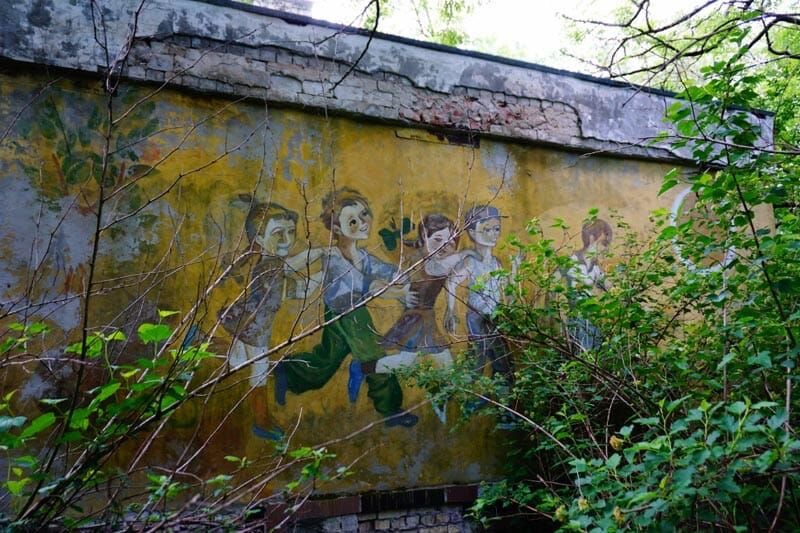
In August of 1988, nearly 2-1/2 years after that disaster, my friend Gisela and I were on a tour of the Soviet Union that was supposed to have included a visit to Kyiv, the beautiful and historic capital of Ukraine. But we had been notified that, for unexplained reasons, that part of the tour had been cancelled and we were instead going to enjoy a few days in the resort city of Sochi on the Black Sea coast. We didn’t need anyone to tell us why we were going to miss seeing the Great Gate of Kyiv, the stirring monument at Babi Yar, and the Cathedral of Saint Sophia. We knew it was the lingering radiation, and that its effect was still being felt, even 95 miles from Pripyat. (I did get to Kyiv five years later, but that is a tale for another chapter.)
So, from Tbilisi, Georgia, Aeroflot Airline transported us the short distance to Sochi in about an hour, depositing us in a subtropical paradise that seemed totally alien in a land better known for its frozen tundras and birch forests. On the bus ride from the airport to our hotel — the Zhemchuzhina (translation: “Pearl”) — we were astonished to see palm trees, tropical flowers galore, and wide streets lined with beautiful white and pastel-colored buildings.
Unfortunately, the Pearl Hotel failed to live up to its name. As with the Cosmos Hotel in Moscow, it was no gem; it looked fine on the outside, but this Pearl’s nacre was only skin-deep. There was a spacious but simple lobby, elevators that mostly worked, and the usual dezhurnaya — sort of a hall monitor — watching out for us (or actually, just watching us) on each floor. And our room contained the expected twin beds (with sheets starched and ironed to a board-like stiffness), a dresser, and a small desk and chair. We found one electrical outlet, located next to the desk at baseboard level, so that when we washed our hair, we had to sit on the floor to use our dryers.
But it was the bathroom that kept us laughing for our entire stay. First was the paper strip affixed across the toilet seat each day, on which was printed a single word in Russian: Disinfected. That was nice, but something we take pretty much for granted in the U.S. — we don’t really need a sign. Still, clean is good.
And then there was the shower. The head and faucet were, quite logically, attached to the wall in an area surrounded on three sides by tile. The fourth side, though, was wide open — no door, no curtain, no tub, no surround of any kind. Not even a lip to keep the water inside. The floor drain in the middle of the shower area didn’t quite keep up with the normal flow of water, so when the shower was running, the entire bathroom — did I fail to mention that it sloped slightly downhill from the shower? — flooded and threatened to flow out to the bedroom, in which event the single electrical outlet on the baseboard would have been in danger of electrocuting anyone unfortunate enough to be sitting on the floor with their hair dryer plugged in. We quickly figured out how to shower with just a trickle of water in as few minutes as possible. And even so, I’m sure the hotel maids were puzzled and less than amused when we kept ordering more towels each day to try to stanch the overflow and returning them sopping wet.
But when on vacation, one does not typically spend a lot of time in the hotel room. Beautiful Sochi awaited.
One of our memorable afternoons was spent at the beach. Now, you readers should please rid yourselves of any mental images you may have of a stretch of beautiful, white sand as far as the eye can see. There was no sand; there were rocks, stretching into infinity. And they weren’t trucked in and spread there for effect; that was the natural “groundscape” (if there is such a word, and if there isn’t, there should be) of that part of the Black Sea shore. The local people, walking barefoot across that unforgiving surface, must have had feet made of rawhide. We Americans unabashedly donned our flip-flops, and I even wore mine into the water, much to Tamara’s amusement.

And by the way, the name of the Black Sea was not just pulled out of thin air. No Caribbean blue waves for this beach. The water is very still where it meets the shore, and actually is black, or dark gray. There are many theories as to the reason for this anomaly, none of which is particularly appetizing, but we were assured that it was quite safe. However, it was some distance out to where the water was deep enough to actually swim, so we were pretty much restricted to wading in any event, and thus safe from encountering anything gross or treacherous.
Or were we? . . . [Cue “Jaws” music.]
No, there were no sharks, at least not that close to shore. But at one point, I saw Tamara reach into the water and pick something up in her hand. Thinking she had found some sort of treasure, I waded over to see what it was, and was alarmed to note that she was holding a live jellyfish. I shouted something like, “What are you doing? You’re going to get stung!” which made her laugh. She explained that these were not stinging jellyfish, and pointed out that I was already wading in a large gathering of them. “Ewwww.” She was right. But after an initial freak-out, and upon being dared by Tamara, I tentatively reached into the water and scooped up one of the little critters. How did it feel? How do you think it felt? It was viscous, glutinous and muculent (per my online thesaurus) — or, in plain English, slick, slimy and slippery. Back into the water it went, and out of the water I went. Enough of the Black Sea for me, thank you.
By the way, does anyone know the correct name for a group of jellyfish? A school? A herd? A flock? Not that it matters, but being naturally curious, I Googled it, and it turns out to be — drumroll, please — a “smack.” A smack of jellyfish. Not in a million years would I have guessed that one.
But enough of the vocabulary lesson — let’s get back to Sochi.
After dinner and a musical performance that night, we saw from the window of our room — which looked out across the sea — some strange searchlights sweeping back and forth across the water. Asking about it the next day, we were told, very quietly, that it was shore patrol on the lookout for drug runners from Turkey. Even Paradise had its seamy side.
The next day, it was off to the Moscow Circus, which happened to be on tour in Sochi that week. The wonder of it shone from the faces of the scores of children in the audience, who undoubtedly had few such diversions to look forward to from day to day. I even learned from one child seated next to me — a beautiful little girl with two gigantic pink bows in her hair — that the Russian word for elephant is slon — which I assure you has not come up in conversation in any context since then, but for some reason has stuck in my mind. Right up there with zhemchuzhina. And, now also, a smack of jellyfish. Travel, as they say, is certainly broadening.
Walking back from our bus along the flower-lined path to our hotel one beautiful summer evening, we American tourists were mixed in among a number of locals apparently out for an evening of dining and dancing at the hotel restaurant and bar. Staggering toward us was an obviously drunk-out-of-his-mind Russian man, weaving and bobbing along the path and headed straight (or not so straight) at us. He stopped directly in front of me, trying to focus on my face, and smelling like a 1920s bootlegger. As the crowd of onlookers watched with amusement, I tried sidestepping to the left; he went to his right. I went right, he went left. And so on, about five or six times. Finally I bluffed, went the opposite of the way he expected, and he was able to stagger on his merry way. As he passed, I blurted out, in Russian, “Pyanniy durak” — “Drunken fool.” And every Russian person within earshot cracked up to hear a foreigner reacting like a local. I was beginning to feel very much at home in this enormous, strange, and varied land.
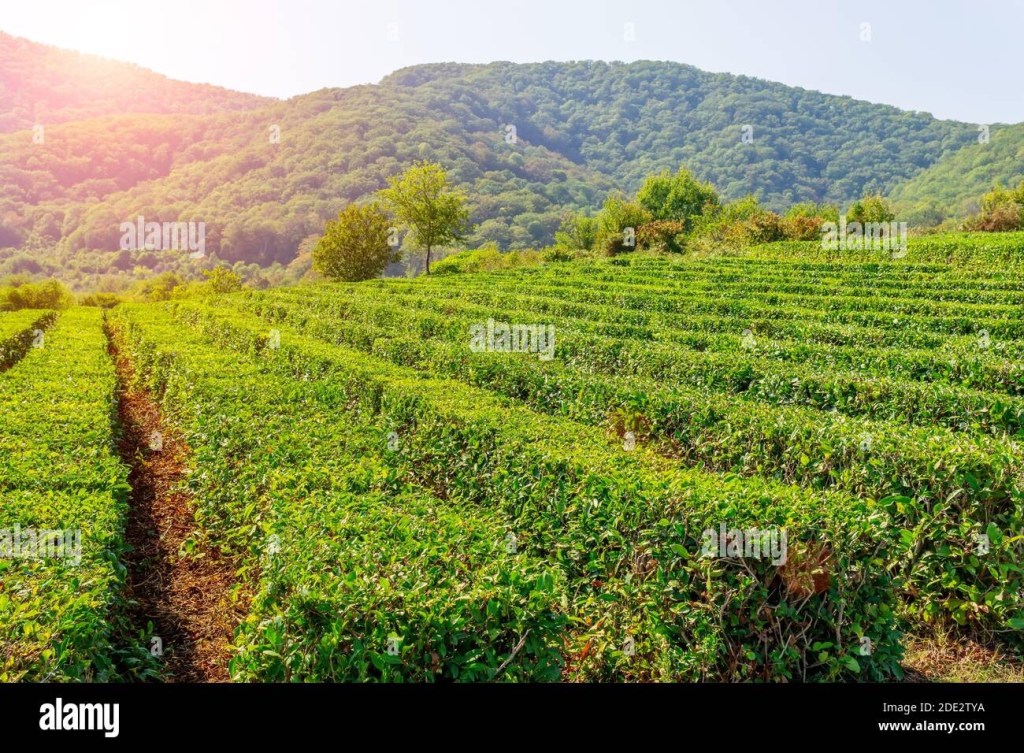
We also spent a glorious, but very long, day traveling by bus to a tea plantation near Krasnodar, where we were treated to a delicious lunch followed by an assortment of desserts and — of course — a selection of exquisite teas brewed from freshly-harvested leaves. The inside of the picturesque teahouse was strewn with dozens of antique samovars, any one of which I would gladly have purchased except for two things: first, they were not for sale, and more importantly, as antiques they could not be taken out of the country without a mess of paperwork, and even that didn’t guarantee success. Oh, and a third factor: I couldn’t have afforded one in any event. So I contented myself with a few packages of tea to carry home.
At Krasnodar we were once again educated in yet another new means of dealing with a most basic aspect of life: the bathroom. There were separate outbuildings for men and women, just a short walk from the teahouse. The exterior of the ladies’ facility looked very nice, and the interior was clean and well-kept — or perhaps I should say well-swept, as there was really nothing to “keep.” Nary a toilet, nor a sink, nor any sort of fixture to be found. Just a couple of deep holes dug into the dirt floor of the single large room. Here was a perfect example of the physical advantages that men have over women: they can pee anywhere. But as a woman wearing slacks (and, presumably, underwear), how does one stand over a hole to go without wetting her clothes — short of completely undressing, that is, since there was nowhere to lay the clothes down other than the dirt floor?
As it turned out, the answer was simple but awkward: by removing one leg from the garments and holding them off to the side. Then you plant one foot firmly on each side of the makeshift urinal, and squat. But not too low, of course. And Heaven help you if you have balance problems, as there was no rail or solid object of any kind to hold onto. This also is where those little packs of Kleenex came in handy again, as there was no toilet paper to be seen, either. I wondered momentarily, as I dropped the used tissues into the bottomless pit, whether they were biodegradable, but didn’t linger long on the thought.
All of this actually made the hotel’s bathroom look downright luxurious. But after drinking several cups of tea, and with another long bus ride ahead of us, we got through it relatively unscathed because we had no choice — though it would have been much simpler if I’d had a third hand to hold the Kleenex pack.
At the end of that fun-packed but exhausting day, and after another long bus ride back to Sochi, the whole group was ready for dinner and some much-needed shuteye. I don’t know about the others, but I slept the sleep of the innocent that night.
Then Tamara vanished.
We awoke on our final day in Sochi to find that we now had a young lady named Masha to accompany us on the last leg of our journey. No explanation, no answers to our questions . . . nothing. Just “Hi, I’m Masha, your new Intourist guide.” Even Lisa, our American guide, was unable to learn what had happened. Everything in the Soviet Union seemed to operate on a need-to-know basis, and apparently no one needed to know. Anything. Ever.
(Note: Lest the reader be concerned about Tamara’s fate, never fear — she showed up in my life again a couple of years later, at my apartment in Virginia, after calling and inviting herself to stay for a few days. As my beloved grandmother would have said — and often did — “Oy, vay!” I must remember to include the story of that visit in a later episode.)
And so we were off once more, this time on a somewhat longer flight to Leningrad — since renamed St. Petersburg, the earlier Soviet name having been consigned to the dustbin of history following the collapse of the Soviet Union, right along with all tributes to the tyrant after whom it was named. Of course, Peter the Great — after whom the city was renamed — was no sweetheart either, but we’re not here for a history lesson . . .
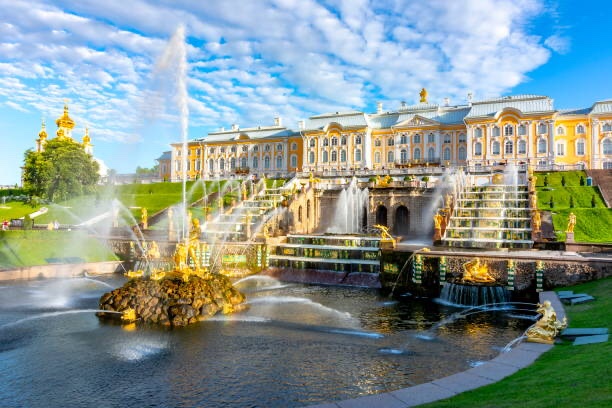
It was late August when we arrived in the city on the Baltic that had once been the Imperial capital of Russia. Often referred to as the Venice of the North, it is a city built on 42 islands threaded throughout with canals and rivers, deservedly boasting of magnificent palaces, broad avenues, manicured parks, decorative bridges, domed cathedrals, the Kirov (now Mariinskiy) Theatre . . . and frequent flooding. We toured the Winter Palace (a.k.a. the Hermitage), the Admiralty, a lesser palace or two, St. Isaac’s Cathedral, and rode on a hydrofoil across a stretch of the Gulf of Finland to Petrodvoryets — the incredible Summer Palace of the Tsars. One night, after dinner, we returned to our hotel, the Pribaltiskaya, in an outlying part of the city around 10:00 p.m., thinking it couldn’t be past 8:00 because it wasn’t yet fully dark. But we had arrived in late summer, in time to witness the end of the famous White Nights — which, while certainly fascinating, also turned out to be quite disorienting.
Gisela and I had one errand to run in Leningrad: a visit to Galina, a woman we didn’t know, but who was a childhood family friend of a young attorney from my firm. Vladimir had been born to a Jewish family originally from Ukraine who, long before his birth, changed their last name to something non-Jewish and managed to find their way to Leningrad to escape the Nazi invasion of their homeland. Smart move, except that they then had to endure the 900-day siege of their new home. But with their adopted name, they survived, thrived, and eventually emigrated to the United States, where young Vladimir, by then a college graduate, was able to attend law school and join Walter Surrey’s firm. He had given me a small gift to bring to Galina, and she invited us to dinner at her apartment. Once again, we missed our evening activity with the group, but it was well worth it.
Leaving our hotel, we were directed by a concierge to a specific taxi, which we had requested earlier in the day. This was a nicer car than most of the taxis — cleaner, and with a tape player and a wide selection of American music tapes most likely bought on the black market, like everything else of any value in those days. But the driver was too friendly and asked too many questions. I had a strange feeling about him, so instead of giving him the exact address, I told him to take us to the intersection near Galina’s building that I had found on a map. He hesitated, asked if I was sure about that, and then finally acceded when I insisted. When we got to the corner, paid him and left the cab, he just sat there and didn’t drive away, but watched to see which way we would go. So we dawdled, fiddling with a purse or the package for Galina, adjusting our jackets and tying an imaginary shoelace, until he finally drove off. Was he being protective, or just nosy? There was no way to know, but it felt decidedly strange.
We had no problem finding Galina’s building. But locating her apartment was a whole new experience. As Vladimir had cautioned me, we found ourselves in a pitch-dark entry, and had to grope for a light switch. The lights were on a timer to conserve electricity, and we hurried up the steps to the second floor before it went dark again. Reaching for the rickety handrail, I immediately recoiled. It was slimy and stank of years — or more like seven decades — of neglect, as did the rest of the building. It was obvious that the common areas had never, ever been cleaned. We couldn’t wait to see what Galina’s communal apartment looked like.
History note: Communal apartments in the Soviet Union dated back to the early Bolshevik days, following the 1917 Revolution. Each family had its own living and sleeping space, but kitchens and bathrooms were shared with other families, usually total strangers (but not strangers for long). Use your imagination — or better yet, don’t.
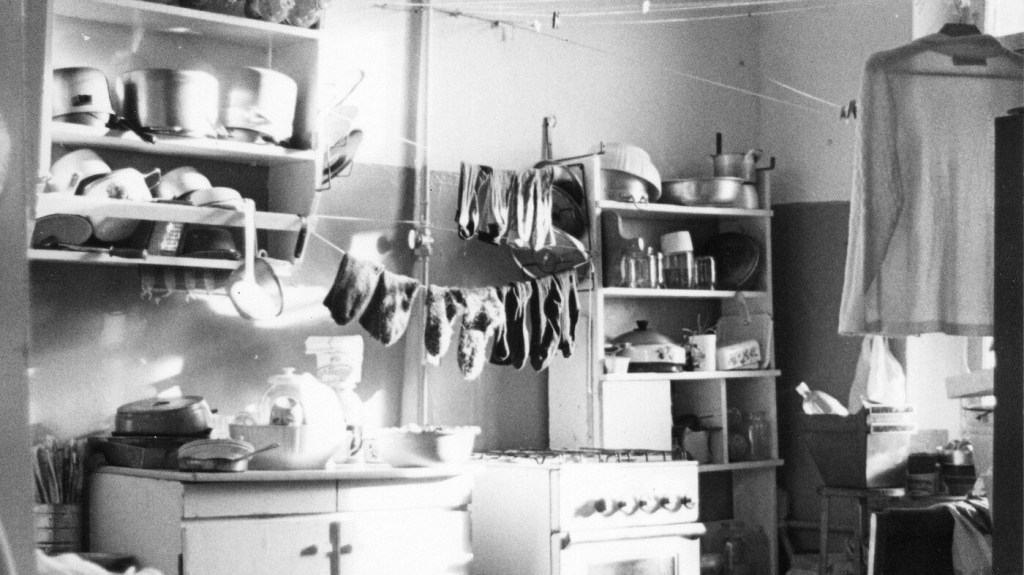
Galina turned out to be a lovely, bright, charming woman who spoke little or no English but had studied German, so Gisela was able to act as interpreter when our Russian language skills failed us. Using a combination of three languages, we got along famously. The apartment — the living area, at least — was poor but immaculate. We glimpsed the tiny communal kitchen, from which, by some miraculous feat of legerdemain, Galina had managed to turn out an exquisite meal. When she skipped over the bathroom on our tour, we took the hint and decided it would be wise to avoid it completely. In any event, the typical Russian “bathroom” consists of a toilet in one room and small bathtub or shower in an adjoining room, with the kitchen sink serving a dual purpose. The Russians are very big on “washing up” before a meal, and after the handrail incident I wasn’t about to argue, but we were glad to use the kitchen sink.
After dinner and more talk of life in America vs. Russia, Galina said that she had a gift for us to please carry back to Vladimir, but that she could only pick it up the next day. She asked if we could meet her in the afternoon at St. Isaac’s Cathedral, and we agreed. When we left around 10:00 p.m., carefully avoiding the offending handrail, she turned the hallway light on for us. Then we had to try to find a taxi in a residential neighborhood — no easy feat, since there were no taxi stands and no way to simply call for one. It was late, and the streets in that part of the city were nearly devoid of traffic. We stood on the same corner that we knew from our earlier drop-off, and after a few minutes, a plain car pulled over and the window was rolled down by a woman driver. At that time in Russia, most families could only afford one vehicle (if any), and that one was usually monopolized by the husband, so seeing a woman driver was strange in itself. But when she offered to go far out of her way to drive us to the Pribaltiskaya on the outskirts of the city, and said she would not accept payment, we were suspicious. Yet, with no taxis in sight, we saw no option and finally agreed to accept her offer.
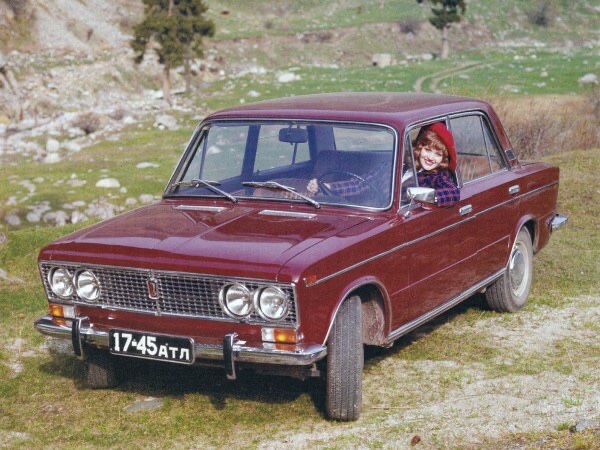
The woman was an excellent driver, well dressed, and — from what little she said — apparently well-educated, but didn’t talk about herself, not even her name. Nor did she ask many questions of us, which was odd, considering that she had just picked up two female American tourists on a dark street corner in a residential neighborhood in Leningrad at 10:00 at night — certainly not an everyday occurrence. She should at least have been curious about what we were doing there. Instead, she simply drove us directly to the hotel, said a quick goodbye, again refused an offer of gas money, and left without so much as a wave of the hand. Like a Russian Lone Ranger, she was there exactly when we needed her, then rode off into the night — just not on a white horse. The question was: Who was she, and why was she also there at that hour? (I know, that’s two questions, again with no answers.)
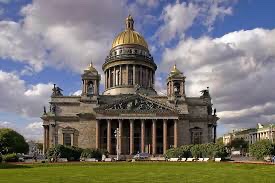
The next day, we met Galina at St. Isaac’s as agreed, on the landing outside the main entrance, at the top of the tall outdoor stone staircase. Her gift for Vladimir consisted of two small paintings by his favorite Russian artist, unframed and in a plastic shopping bag. As we talked for a few minutes, I noticed a man standing at the far end of the veranda, smoking and trying to be nonchalant but clearly watching our little trio. He never approached us, and did not follow Gisela and me (as far as we knew) when we headed off toward Nevsky Prospekt for a bit of shopping; so I chose to believe that he was just stationed there for “security” purposes. Maybe so, maybe not.
Even here in Leningrad, far from Moscow, we seemed to be of some interest. But to whom? And why? Was this just common practice with American tourists? Or because we sometimes ventured out on our own, without our group and Tamara or Masha? Or because of Viktor Akimov and Georgi Karpov again? I’ll never know. It was like being in a bad spy movie, and we were enjoying it — or maybe just imagining it — like a couple of big kids.
Despite our little escapades, we survived our tour of the USSR, which was now drawing to a close. We hated to leave, but had no option: when your visa expires and your tour group goes home, you’d better be with them. But there was one last bit of rather sadistic fun. One of our group — a woman whose entitled attitude had not endeared her to the rest of us — had inadvisedly decided to purchase one of those outrageously expensive samovars, not at the tea house, of course, but at an antique shop in Sochi. She knew she couldn’t sneak it out in her luggage, so she very openly, and wisely, declared it at Customs. Seeing that it was a genuine antique, the Customs agent told her, in no uncertain terms, Nyet!!!! Despite the papers the antique dealer had given her, this was not allowed, and her treasure was confiscated. Several of us had tried to warn her, but she wouldn’t listen. I don’t know what she paid for it, but she might as well have flushed the money down a disinfected toilet. She just couldn’t understand why she hadn’t been able to bully the Customs agent into letting her have her own way — the sort of American tourist who gives all American tourists a bad name — or why she didn’t receive a lot of sympathy from her fellow travelers.

And finally, we were aboard our PanAm flight home. After lunch in the airport during our stopover in Helsinki, Finland, and a much-needed nap on the plane, we arrived safely at JFK’s international terminal in the late afternoon, jet-lagged and suffering from reverse culture shock. But that one excursion to a foreign land had been enough to infect me with an incurable case of travel fever. It would be a year and a half before my next overseas trip, but when the opportunity arose, I was more than ready. In the meantime, life at home was anything but dull.
See you next time, when I chronicle my return to “civilization.” Enjoy your weekend, and be well.
Brendochka
1-19-23 (re-posted 11/___/23)
 The Blog About Everything … and Sometimes Nothing